How Often Should You Water Indoor Plants?
Read soil and pot signals before watering.
Gardening
An indoor herb garden succeeds when the herbs match the light and the routine is simple enough to repeat.
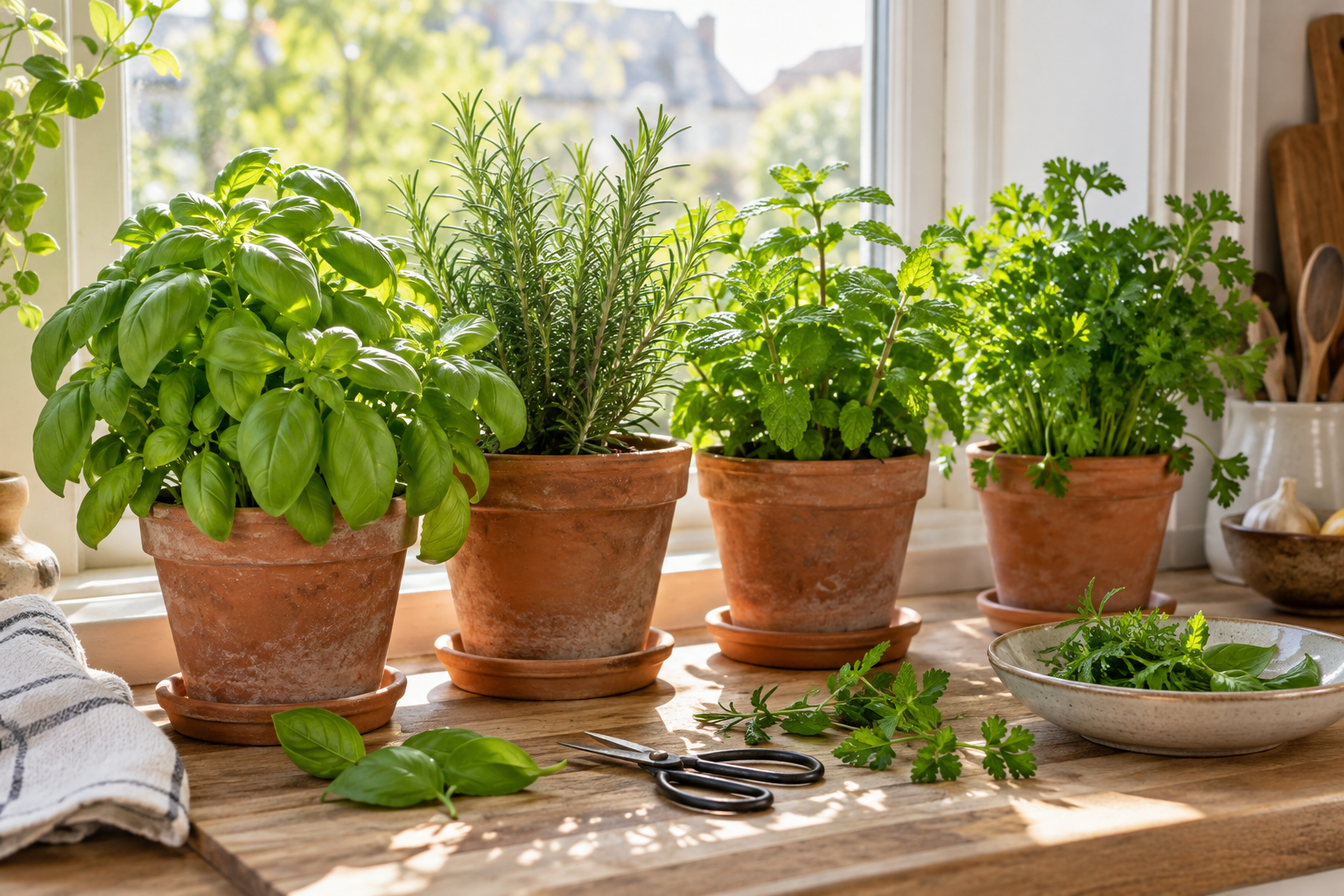
Growing basil beside a kitchen window is appealing, but herbs are living crops rather than countertop decoration. They need enough light to replace the leaves you cut, a pot that lets excess water escape, and a routine that changes with the season. Begin with two herbs you use often. Learning how each responds in your particular room is more valuable than filling a crowded sill with plants that need incompatible care.
Observe direct sun rather than judging a room as “bright.” In the Northern Hemisphere, a south-facing window commonly provides the strongest indoor light; east-facing windows often offer gentler morning light, while west-facing windows can become hot in the afternoon. North-facing windows may suit a few tolerant foliage plants but often do not provide enough intensity for vigorous basil or other sun-loving culinary herbs. Window direction is only a guide: nearby buildings, trees, screens, and seasonal sun angles can change the result.
Basil, thyme, rosemary, oregano, and sage generally need the brightest available position. Parsley, cilantro, chives, and mint may tolerate slightly less direct sun, but they still need good light to stay compact. Turn pots a quarter turn every few days if stems consistently lean toward the glass. Keep leaves from pressing against a cold winter pane, and protect plants from hot drafts or the blast of an air-conditioning vent.
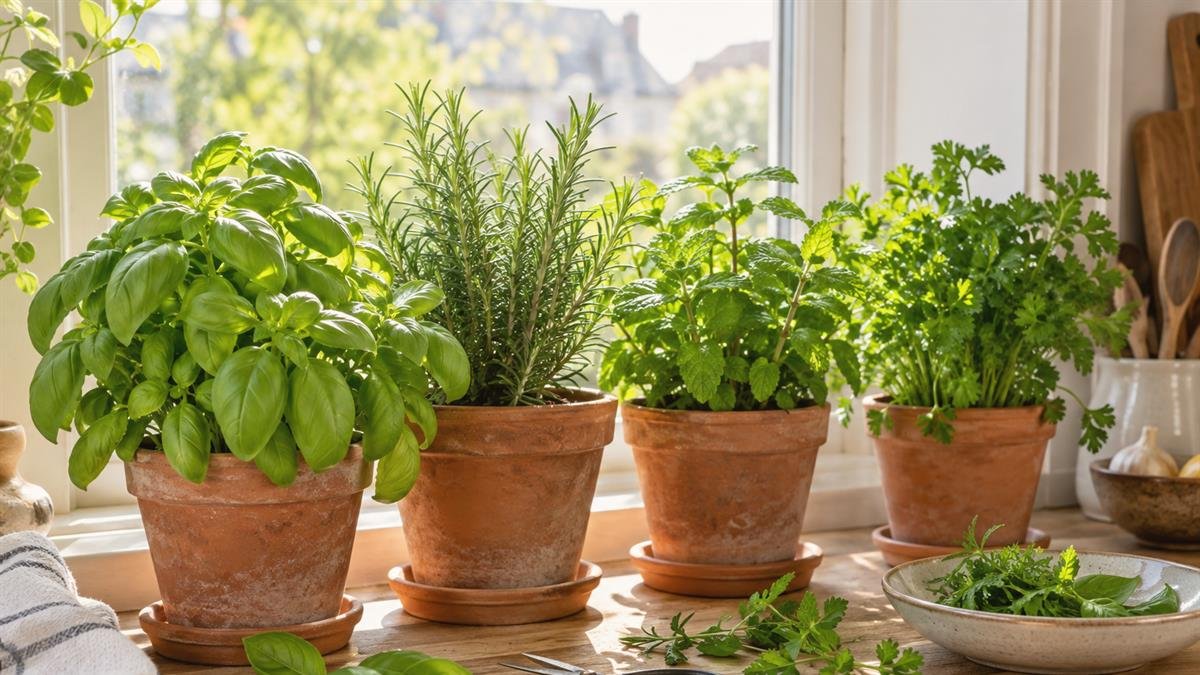
Use a pot with a drainage hole and a saucer you can empty. A decorative outer pot is fine if the growing pot can be removed for watering; do not let roots sit in water at the bottom. Separate pots make care clearer. Mint is vigorous and thirsty compared with rosemary, while basil can use more consistent moisture than thyme. Combining them in one undrained container makes it difficult to satisfy either plant.
Choose a light, clean potting mix intended for containers, not dense garden soil. Repot only when roots are crowded or the plant is outgrowing its pot; a much larger container can remain wet longer than small roots can use it. When bringing home nursery herbs, inspect whether several seedlings have been packed tightly into one small pot. They may need dividing or a larger container after they have acclimated.
Check the mix before watering. In a sunny window, a small basil pot may dry quickly; a rosemary pot in winter may stay moist longer than expected. Water the soil slowly until excess runs from the hole, then let the pot drain. Do not use a weekly schedule as a substitute for checking. Pale, stretched growth is usually a light problem, while limp stems can come from both dry and waterlogged roots.
Harvest leafy herbs from active stems, taking a little at a time. On basil, pinch just above a pair of leaves to encourage branching. Remove flower buds when the goal is continued leaf production. With woody herbs such as rosemary, avoid cutting far back into leafless old wood. Clean scissors are helpful for tougher stems. Regular modest harvests keep plants useful; removing most of a small plant at once slows recovery.
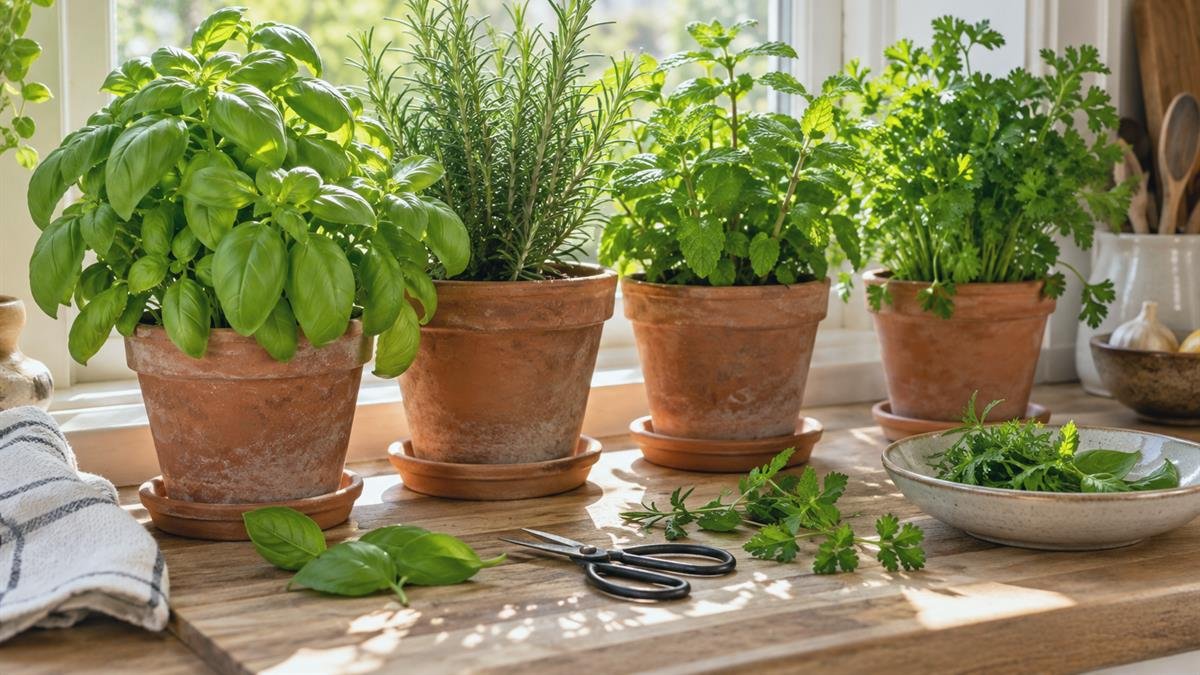
If a herb remains long, pale, and sparse despite correct watering, move it to better light before adding fertilizer. A small grow light may be useful where natural light is limited; follow the light manufacturer’s placement and timing guidance, and keep electrical equipment away from spills. If extra light is not practical, choose an herb that better suits the available window or buy small amounts of fresh herbs as needed. A healthy, modest setup is more useful than a stressed collection.
Watch for aphids, fungus gnats, or sticky residue when bringing plants indoors. Isolate a new plant briefly, inspect leaf undersides, and identify the pest before using a treatment. Good airflow, drainage, and not overwatering prevent many problems. Keep a short note of each herb’s location and watering pattern; after a season, it becomes a tailored care guide for your home.
Keep herbs close enough to harvest but not so close to heat, steam, or splashing that the leaves stay wet. A windowsill is useful only if it is wide and secure; a small shelf directly in the window’s bright zone may work better. Use trays that protect the surface beneath pots without trapping runoff against the pot base. Label similar-looking seedlings until their scent and leaf form are familiar.
Start seeds for quick crops such as basil or cilantro in succession rather than expecting one plant to provide indefinitely. A new small pot started every few weeks during the appropriate season can keep harvests steady. For woody herbs, buy a healthy established plant if your light is marginal; they are slower to replace from seed. Harvest only what you will use, refrigerate cut herbs promptly, and remove spoiled leaves from the pot.
Some herbs simply perform better outdoors during suitable weather, where light and airflow are stronger. Acclimate them gradually rather than moving a shade-grown plant straight into intense sun. Check overnight temperatures and local frost risk before leaving tender herbs outside. When bringing a plant back in, inspect it carefully for insects and wash the pot exterior. An indoor herb garden is a flexible growing system, not a rule that every herb must remain indoors all year.
Remove fallen leaves from saucers and windowsills, and wash pruners between plants if a disease problem is suspected. Good housekeeping makes early pest signs easier to see and prevents water from sitting where it can damage a sill. If fertilizer salts form a pale crust on the pot or soil surface, flush the pot thoroughly when the plant is actively growing and allow it to drain; then review whether fertilizer has been applied too often.
Choose one regular inspection day, but use it to observe rather than water automatically. Look at new growth, turn pots for even exposure, empty saucers, and check the potting mix. The habit takes only a few minutes and prevents small issues from becoming a reason to replace the whole herb garden.
Match the potting mix and feeding plan to the way the herb is grown. A pot with a drainage hole and a fresh, free-draining indoor potting mix is more reliable than garden soil, which can compact in a container and hold water around roots. Do not add gravel to the bottom as a substitute for drainage; it reduces useful root space and does not create a drainage hole. Most herbs need modest feeding only while actively making new growth. If a label calls for fertilizer, dilute and apply it according to the product directions rather than adding it whenever leaves look pale. Pale leaves can also result from poor light, cold glass, soggy roots, or a pot that has become crowded. When roots circle densely at the drainage hole and the plant dries unusually fast, move up only one pot size and disturb the roots as little as possible.
For container size, drainage, and potting-mix fundamentals, see Illinois Extension’s houseplant guide.