How to Start a Vegetable Garden in a Small Backyard
Explore another practical gardening guide.
Gardening
Heat protection focuses on roots, moisture, and recovery.
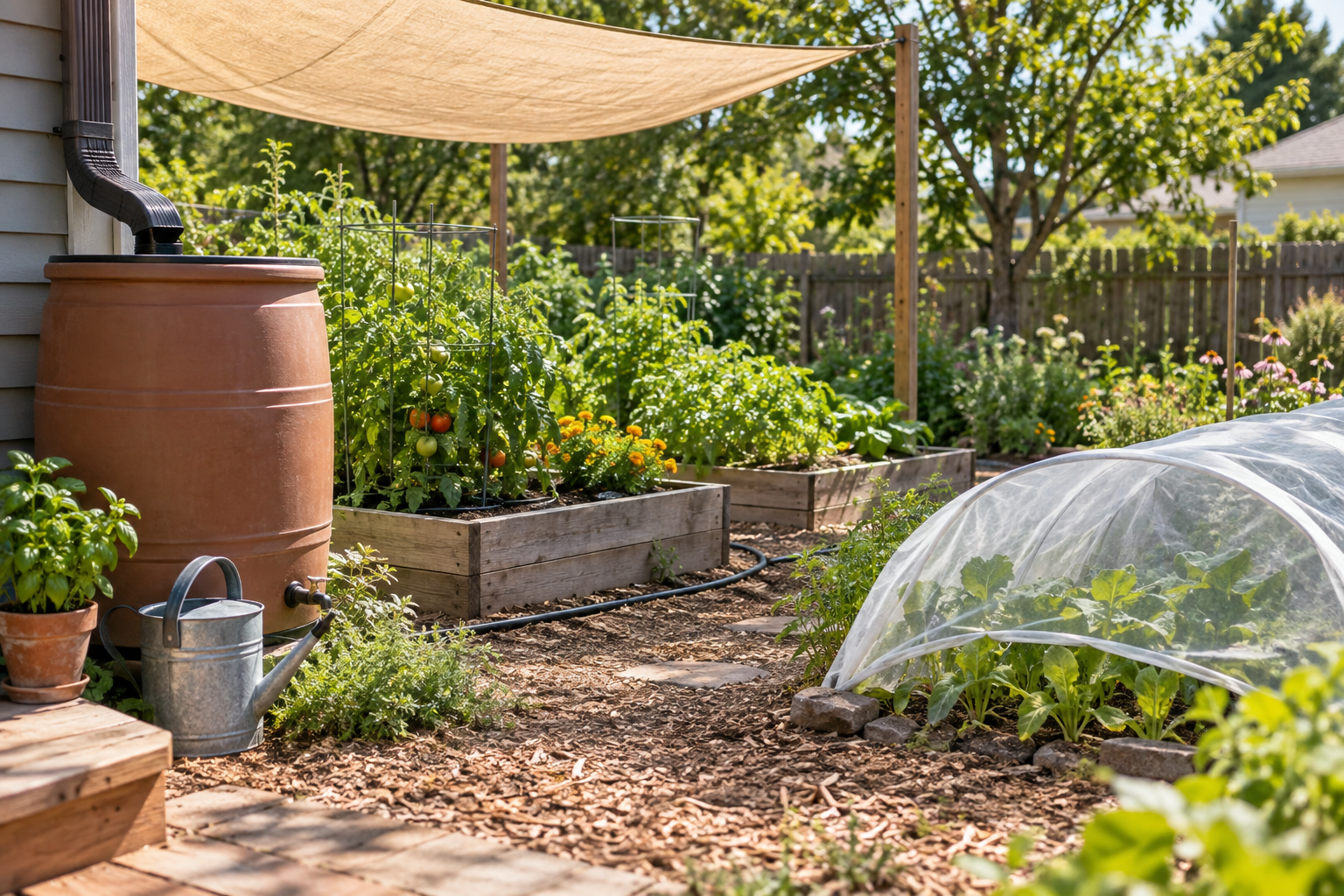
A heat wave stresses plants through more than a high thermometer reading. Hot sun, warm nights, wind, dry soil, and reflected heat from paving can combine to make water move out of leaves faster than roots can replace it. The best response is not to do everything at once. Protect the plants with the highest risk first, keep their root zones supplied with water, reduce extreme exposure where practical, and avoid jobs that ask a stressed plant to make new growth.
Start with newly planted trees, shrubs, vegetables, annuals, and anything in a container. Their roots have less access to deep moisture than established plants. Then check plants beside a south- or west-facing wall, dark paving, gravel, or a fence that reflects heat. Shallow-rooted leafy vegetables, hydrangeas, and recently divided perennials can show stress earlier than established drought-adapted plants. Local water restrictions always come first; use available water where it has the greatest effect.
Look at the soil before assuming wilt means thirst. Many plants droop temporarily in the hottest afternoon hours and recover overnight if their root zone is moist. Check several inches down with a trowel or your finger, away from the stem. Dry soil and a light container signal a need for water. Wet soil paired with wilting can mean roots are already struggling, and adding more water may worsen the problem.
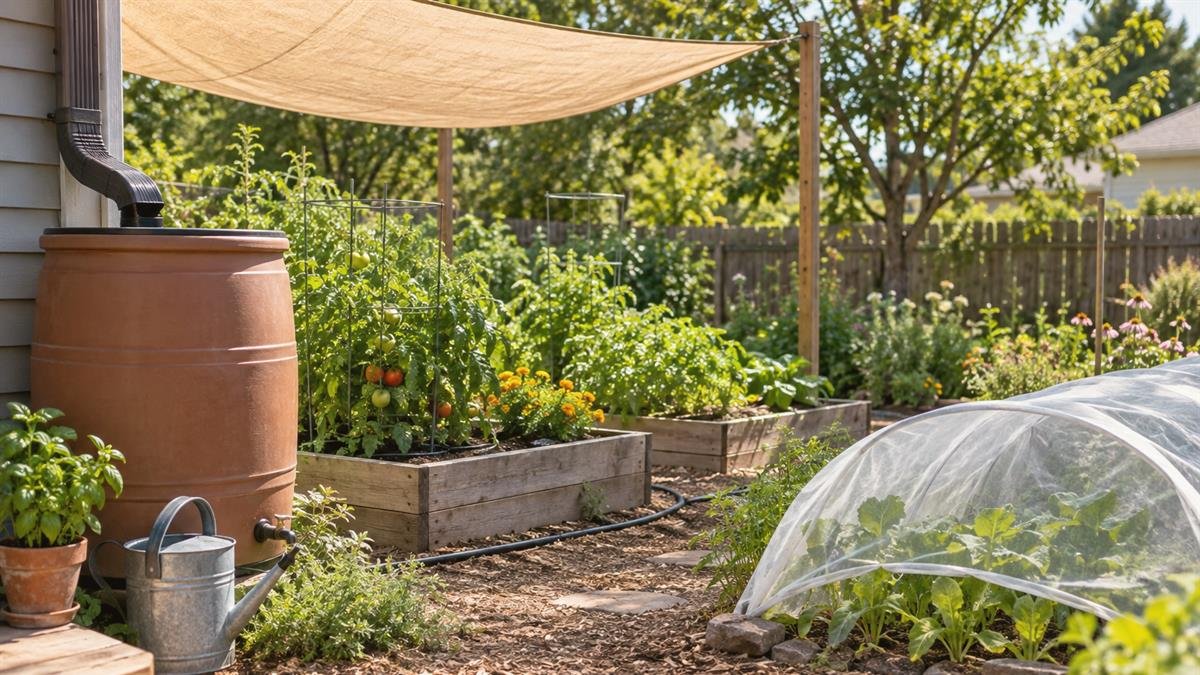
Early morning is usually the most efficient time to water because foliage has time to dry and less water is lost to heat. Apply water slowly enough that it enters the root zone rather than running down a slope or across compacted soil. A soaker hose, drip line, or low-flow hand watering can be useful. One thorough soaking, followed by a soil check, is generally better than repeated shallow splashes that encourage roots to remain near the hottest surface layer.
Containers deserve separate attention. Check them in the morning and again late in the day during extreme heat. A pot may need water more often than an in-ground plant, but it still needs drainage. Move small containers out of reflected afternoon heat if that can be done without shocking the plant. Grouping pots can reduce wind exposure, but leave enough space for air movement and do not stand them in a tray of water for days.
A temporary shade cloth, patio umbrella, or light-colored screen can reduce the harshest afternoon sun for vulnerable plants. Position it so air can move freely and foliage is not pressed against hot fabric. Shade cloth is especially useful for leafy vegetables and new transplants; a plant that normally needs full sun may still benefit during several days of extraordinary heat. Remove temporary shade when conditions return to normal so it does not become a new light problem.
Mulch keeps the soil surface cooler and slows evaporation. Spread a suitable organic mulch over bare soil, keeping it away from stems, crowns, and tree trunks. Do not pile thick fresh mulch onto already dry soil and assume it has watered the roots; water first if the root zone is dry. Avoid heavy pruning, transplanting, dividing, or strong fertilizer applications during the event. Those tasks increase demand for water or expose tissues when the plant is least able to recover.
Leaf scorch, dropped flowers, and temporary wilting can look alarming, but an established plant may recover once temperatures ease. Wait a few days before cutting back damaged leaves, unless there is a disease or safety reason to remove them. Scratch the bark of a small twig gently: green tissue beneath may show that the stem is still alive. Continue checking moisture as the heat wave ends, because rain may not immediately rehydrate a dry root zone.
Take notes on which places suffered most. A scorched container corner may need a larger pot, a different crop, or a shade solution next season. A bed that dries repeatedly may benefit from compost, mulch, and an irrigation adjustment. Heat waves reveal weaknesses in a garden system; recording them turns a stressful week into useful planning information.
Vegetable gardens need harvest attention as well as water. Pick ripe fruit and leaves promptly so the plant does not carry unnecessary load, but do not strip foliage that shades developing fruit. Leafy greens may bolt in sustained heat; temporary shade can extend the harvest, while sowing another small batch later may be more practical than trying to force an exhausted planting to recover. For fruiting crops, even moisture is important: wide wet-to-dry swings can contribute to problems such as splitting or blossom-end issues, although each cause should be identified rather than assumed.
Young trees and shrubs need water applied over their developing root zone, not only at the trunk. A slow soak followed by mulch is more useful than a quick spray on leaves. Avoid placing fertilizer spikes or fresh manure around a stressed tree during heat. Lawns are different again: if local rules allow watering, water deeply and less often, and raise mowing height rather than scalping turf. Some cool-season lawns may go dormant in heat and recover when conditions improve, so confirm local grass and water guidance before assuming they are dead.
Schedule garden work early, wear sun protection, and take breaks in shade. Do not turn heat response into an all-day emergency project. If a hose, sprinkler, or temporary shade structure creates a trip hazard, secure it before leaving the area. Keep children and pets away from treated areas and from standing water. A calm, short routine done safely is better for both the garden and the gardener.
Check forecasts daily. A cooler overnight low can be as important as the afternoon high when deciding whether plants need another watering or a little additional protection.
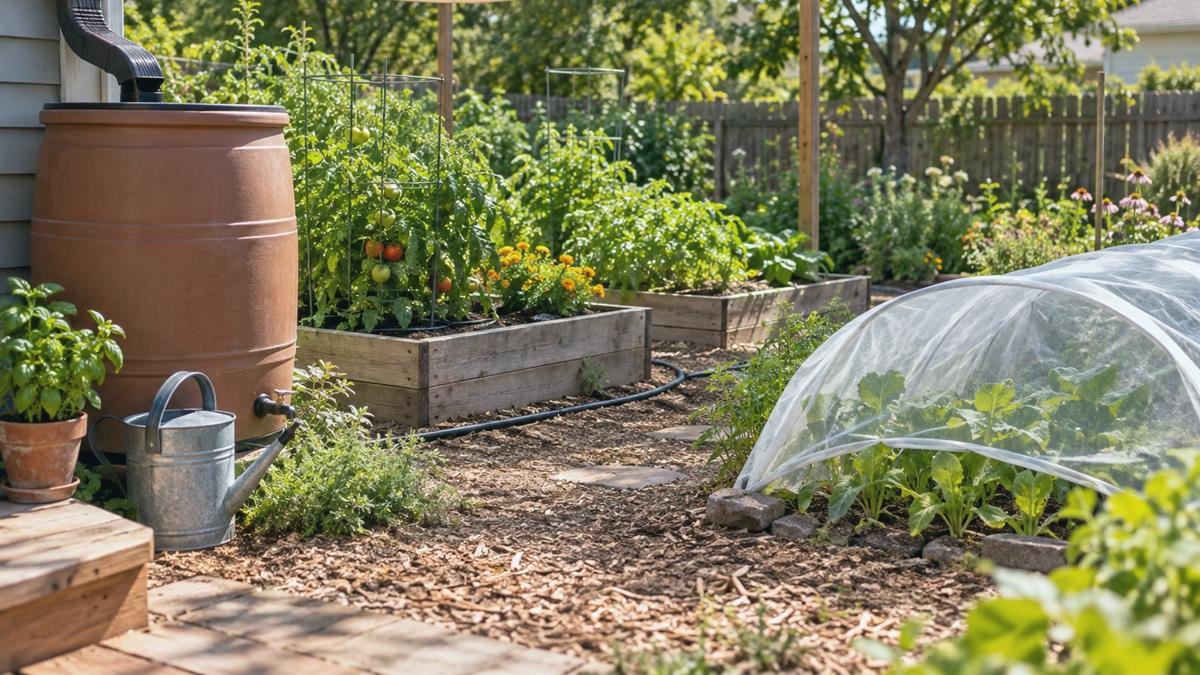
After the heat passes, give plants time to recover before deciding they have failed. New growth, soil moisture stability, and firm morning leaves are better signs than a single hot-afternoon appearance. Keep notes on the most exposed areas for future planting decisions.
Prioritize newly planted trees, vegetables in containers, and plants against reflective walls because their root zones heat and dry faster than established plants in the ground. Check containers early: if the mix is dry below the surface, water slowly until it drains, then move the pot only if its new location still provides the light the plant needs. Avoid fertilizing a plant that is visibly heat-stressed; fertilizer can encourage tender growth or worsen a dry-root problem. A lightweight shade cloth raised above foliage is safer than fabric resting directly on leaves, and it should be removed or adjusted once the weather moderates. Note which parts of the yard scorch first, then use that record to choose mulch, a different planting date, or a more heat-tolerant plant next season.
For heat-response guidance, see University of Maryland Extension’s vegetable-garden weather guidance and Penn State Extension’s watering advice for summer heat.