How to Remove Common Carpet Stains Safely
Explore another practical cleaning & care guide.
Cleaning & Care
A dependable kitchen routine includes the places hands touch most.
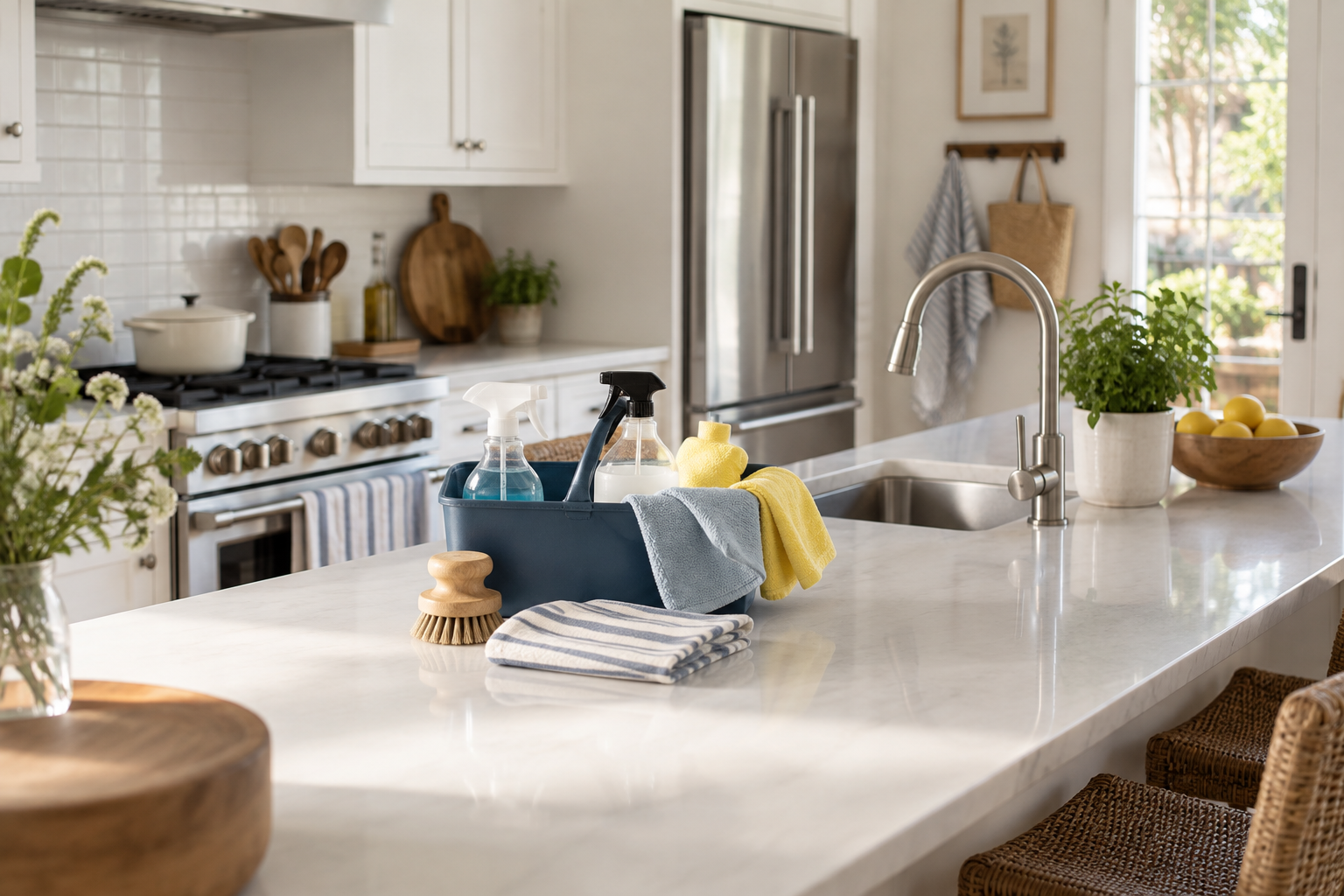
A dependable kitchen routine includes the places hands touch most. The useful starting point is refrigerator handles, cabinet pulls, the faucet, and switches. In this guide, the practical focus is workflow, contact points, and product instructions.
High-touch cleaning is most useful when it follows how people actually move through the kitchen. Think about the refrigerator handle, cabinet pulls, faucet lever, microwave buttons, light switches, chair backs, appliance controls, trash-can lid, and the handles of tools used while cooking. These are different from food-contact surfaces, which may need their own washing and sanitizing process. A clear sequence prevents the routine from becoming a hurried wipe of only the counter.
Gather clean cloths and identify which areas contact food, which are handles or controls, and which are delicate finishes. Open a window or use normal ventilation if the chosen product requires it. This small preparation prevents one cleaner or cloth from being used everywhere.
Begin with the mildest method; you can always repeat a gentle pass.
Use a fresh cloth or pad once the one in your hand is dirty.
Let the product do the work for the time stated on its label.
Check the surface while it dries instead of judging it while it is still wet.
Stop if the finish changes, feels tacky, or reacts in a way you did not expect.
Work from cleaner areas toward dirtier ones and let products sit only for the stated dwell time. For this task, use separate cloths for food-contact areas and handles, replacing them as soil builds. For this project, return to the original purpose—workflow, contact points, and product instructions—whenever a choice adds cost, complexity, or maintenance.
For lean itchen igh ouch reas, use only products and tools approved for the material, and stop if cleaning reveals a damaged finish, persistent odor, leak, or other maintenance issue.
Start by clearing food and loose items from the area. Wash hands, then use a clean cloth or disposable towel appropriate for the task. Clean visible soil first; a disinfecting product cannot work as intended through grease or crumbs. Move from cleaner, dry areas toward the sink, trash, and floor. Use separate cloths for food-prep surfaces and for dirtier locations such as the trash lid or floor, and replace a cloth when it becomes visibly soiled.
Read the product label for the correct dilution, ventilation, surface suitability, and contact time. “Contact time” means the surface needs to remain wet for the stated period; spraying and immediately wiping may not deliver the result the label describes. Do not mix bleach, ammonia, acids, or other products. A stronger smell does not mean a better result, and mixed chemicals can create hazardous fumes.
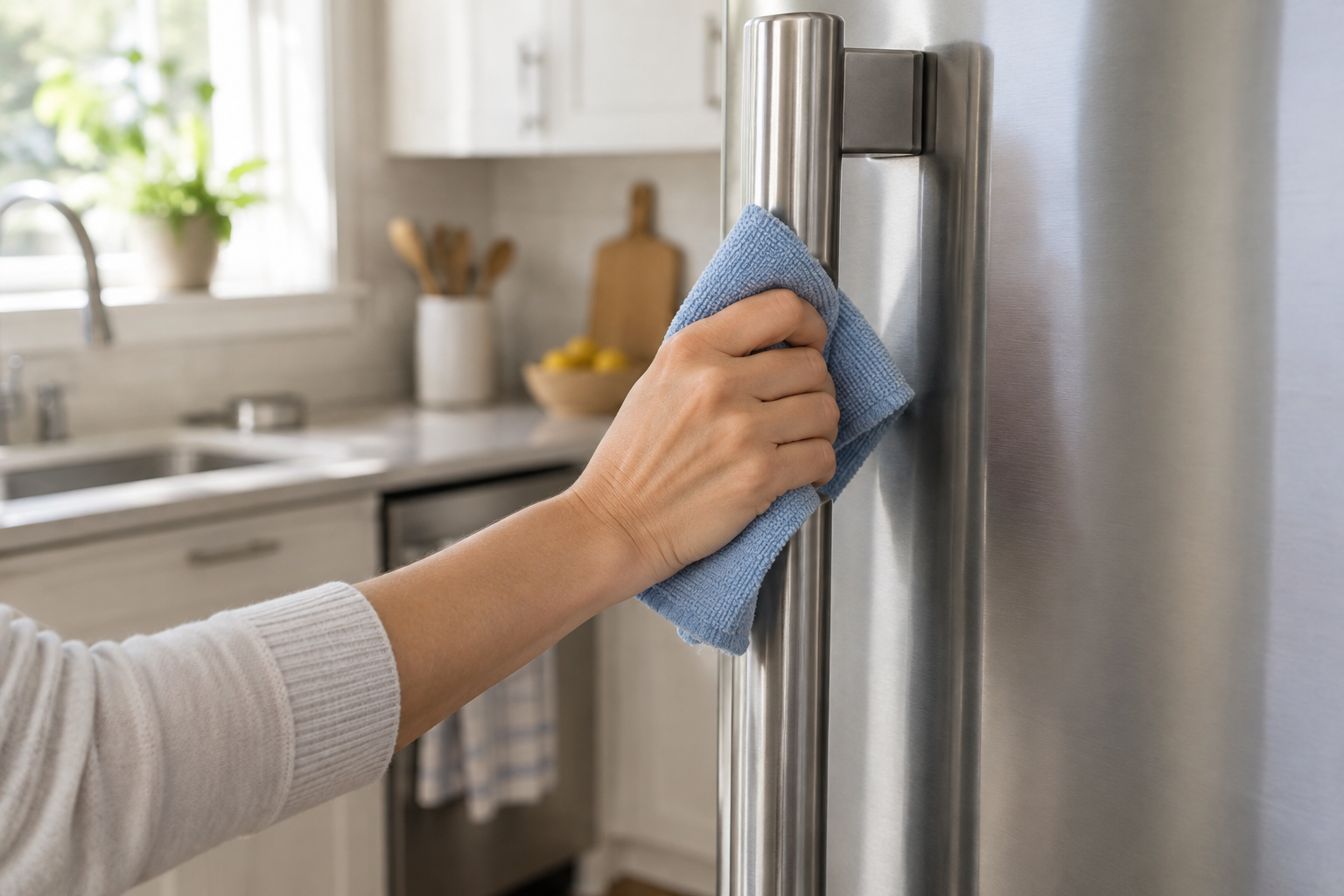
Use the mildest effective method for the material. Stainless steel, painted cabinets, stone, wood, glass, and appliance displays may have different manufacturer instructions. Test an unfamiliar cleaner in an inconspicuous area, and do not use abrasive pads on a finish that can scratch. Dry moisture-sensitive edges, control panels, and wood promptly. For a refrigerator handle or faucet, pay attention to seams and underside grips where residue collects.
For food-contact counters and cutting boards, wash according to the surface instructions before any sanitizing step. Replace deeply scored plastic boards or damaged surfaces that cannot be cleaned effectively. Keep raw-food cleanup separate from a routine handle wipe, and wash reusable cloths thoroughly after use. Cleaning tools also need care: a damp, dirty sponge or cloth can spread soil from one surface to another.
Some touchpoints merit attention after food preparation or when someone is ill; others can be included in a regular weekly kitchen clean. Make a short room-specific list rather than trying to remember every handle. If a surface is repeatedly sticky or dirty, look for the cause: an overflowing trash bin, a leaking dispenser, a missing spoon rest, or a tool stored too far from its use point. Small workflow fixes make cleaning more effective.
Open doors and drawers as you clean, and inspect the places fingers naturally grip: the underside of cabinet pulls, the refrigerator gasket edge, dishwasher buttons, drawer faces, and the handle of the kettle or coffee maker. Unplug small appliances before cleaning around controls when the manufacturer recommends it, and never spray liquid directly into a vent, outlet, or electronic display. Apply a suitable cleaner to the cloth instead, then wipe carefully.
Do not forget reusable shopping bags, lunch boxes, and water bottles that pass through the kitchen. Wash them according to their care labels and let them dry fully before storing. If household members use a shared tablet, phone stand, or cookbook holder while cooking, clean those items with a method appropriate to the material and manufacturer guidance. Keeping these touchpoints in the same routine avoids treating the counter as the only part of the kitchen that matters.
After cleaning, return only the daily-use items to the counter, empty the sink strainer, and let cloths dry rather than leaving them crumpled. Check the floor for dropped food or water near the sink and refrigerator. A final dry, clear pass reduces slips, pests, and the feeling that the next meal begins in a mess. Record any damaged seal, leaking appliance, or persistent odor for repair rather than trying to solve it with more cleaner.
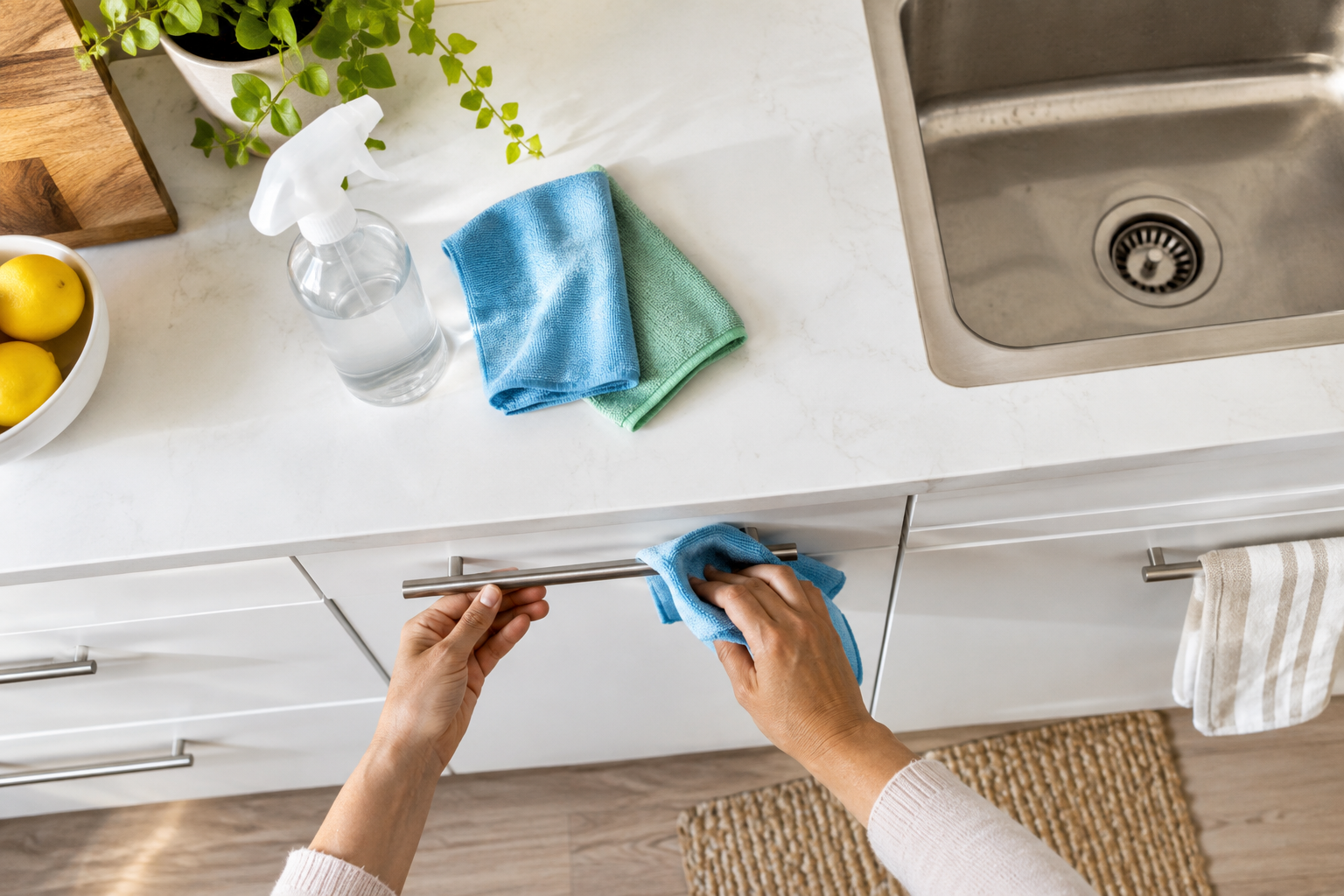
A repeatable routine is safer than occasional aggressive cleaning. Separate food-preparation cleaning from general touchpoint cleaning. Counters used for raw ingredients, refrigerator handles, cabinet pulls, faucets, light switches, and appliance panels may need different methods. Use a clean cloth for the final pass rather than carrying residue from the sink or floor back to a handle. Stainless steel, painted cabinets, stone, touchscreens, and coated panels can react differently to abrasives, bleach, alcohol, or excess water, so follow the surface or appliance instructions when unsure. Replace worn sponges and wash reusable cloths promptly.
Set the frequency by use, not by an arbitrary calendar. A refrigerator handle used all day may need attention during routine meal cleanup, while a cabinet pull in a rarely used area may simply be included in a weekly pass. If someone in the household is ill, use the relevant public-health and product guidance for additional cleaning.