How to Clean a Kitchen Without Missing High-Touch Areas
Explore another practical cleaning & care guide.
Cleaning & Care
Gentle blotting and patience are usually safer than aggressive scrubbing.
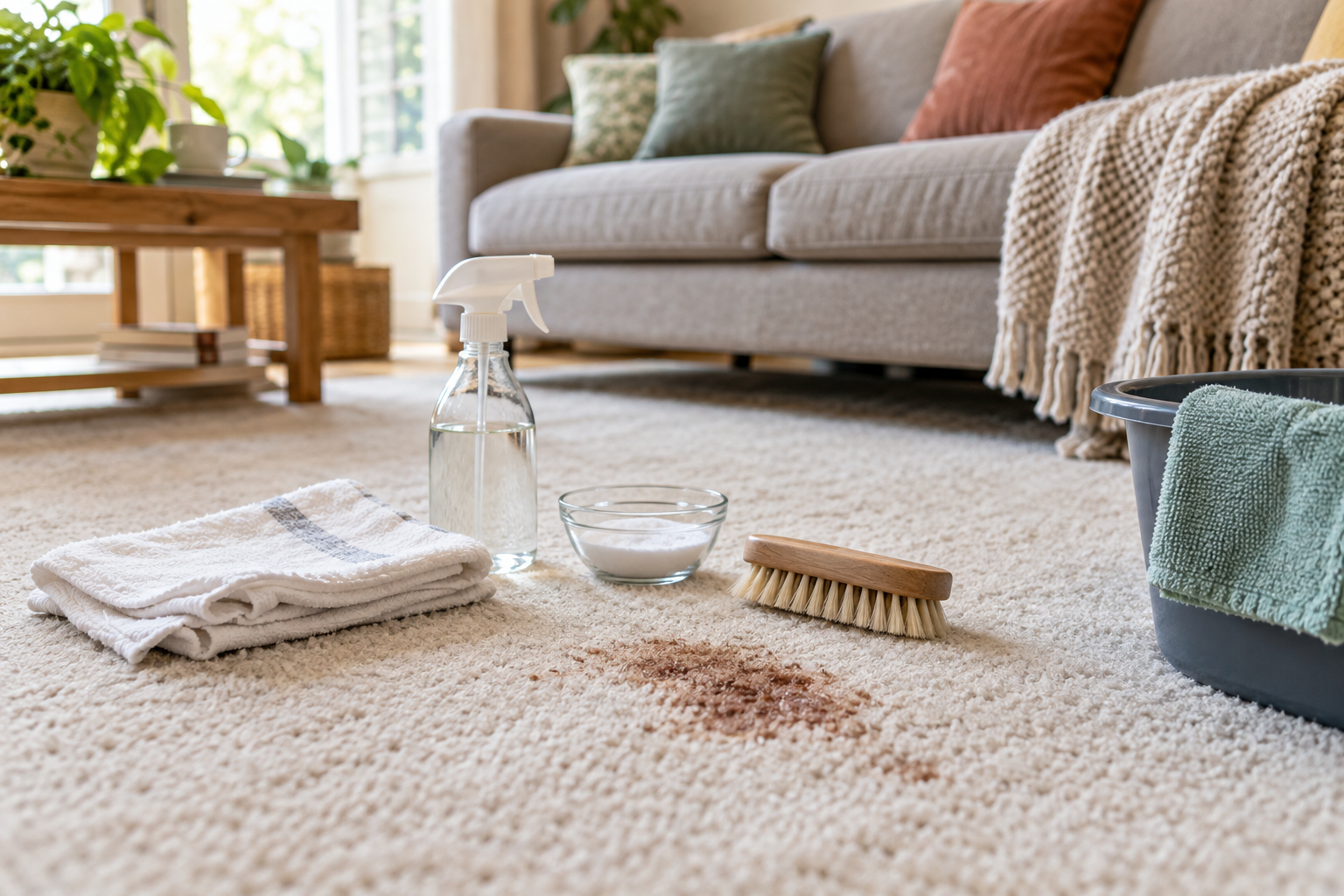
Gentle blotting and patience are usually safer than aggressive scrubbing. The useful starting point is identifying the spill and blotting from the outside inward. In this guide, the practical focus is fast response and fiber-safe methods.
A spill becomes easier to manage when you act quickly, identify what reached the carpet, and avoid pushing it deeper into the backing. The aim is to lift as much material as possible while keeping the carpet from becoming over-wet. Carpet fiber, dye stability, pad condition, and the age of the stain all affect the safest method, so test first and use the carpet manufacturer’s care guidance when it is available.
Before treating a spot, identify the spill if possible, check the carpet maker's care guidance, and gather plain white cloths and a dull scraper. Test any product where the result will not show. This preparation avoids setting a stain or spreading color into a larger area.
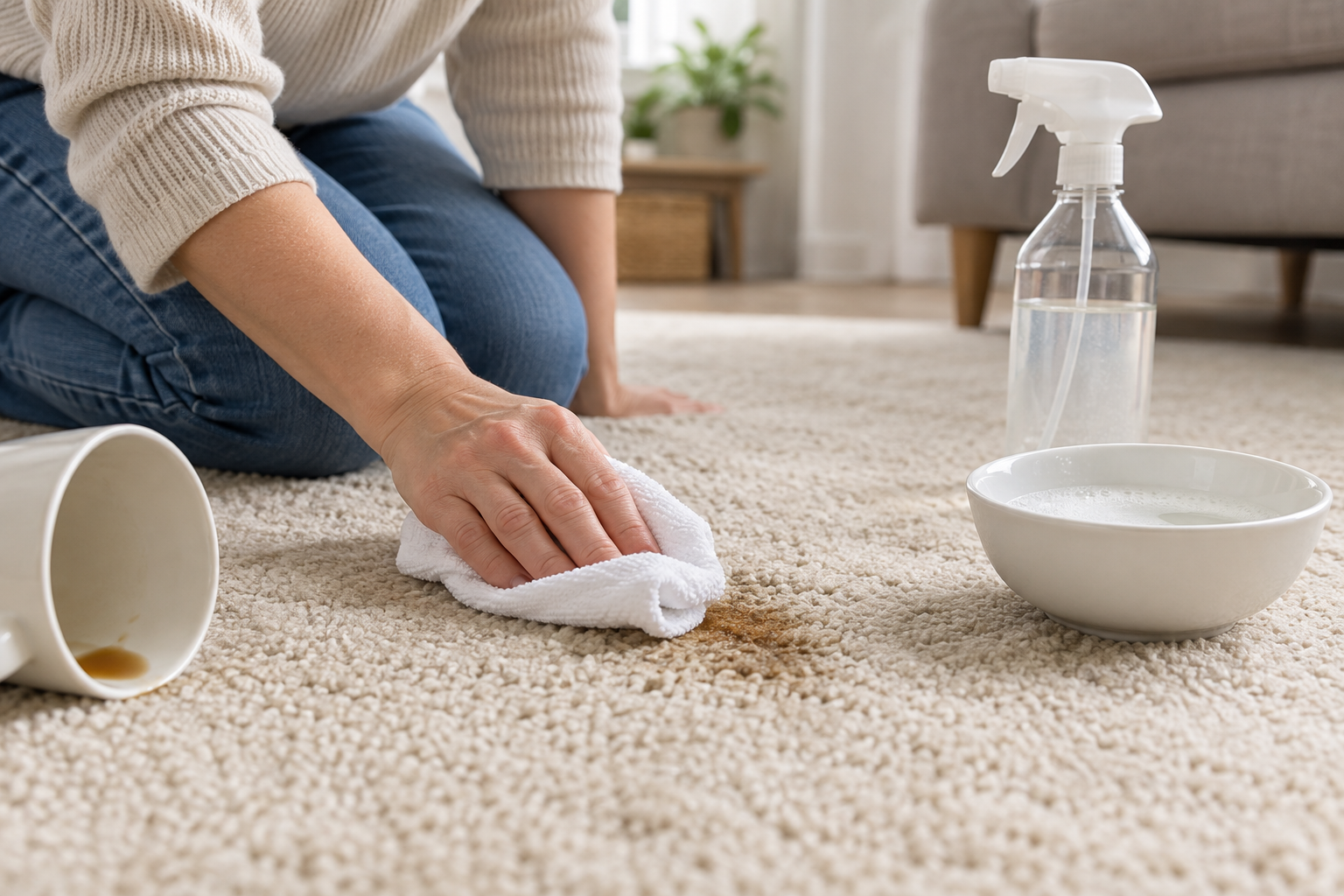
Begin with the mildest method; you can always repeat a gentle pass.
Use a fresh cloth or pad once the one in your hand is dirty.
Let the product do the work for the time stated on its label.
Check the surface while it dries instead of judging it while it is still wet.
Stop if the finish changes, feels tacky, or reacts in a way you did not expect.
Work from cleaner areas toward dirtier ones and let products sit only for the stated dwell time. For this task, blot with clean absorbent cloths until transfer stops and avoid soaking the backing. For this project, return to the original purpose—fast response and fiber-safe methods—whenever a choice adds cost, complexity, or maintenance.
For emove arpet tains, use only products and tools approved for the material, and stop if cleaning reveals a damaged finish, persistent odor, leak, or other maintenance issue.
Lift solids with a spoon or dull edge, working from the outside toward the center. For a liquid, press a clean white absorbent cloth or paper towel onto the spot and replace it as it becomes wet. Do not rub in circles; friction can distort fibers and spread color. Blot until little transfers to the cloth before adding any cleaning solution. Photograph an unusual stain if you may need a professional assessment later.
Test any product in an inconspicuous area first. Use a small amount and check after it dries for color change, texture change, or residue. Wool, silk, antique rugs, hand-dyed materials, and carpets with unknown backing deserve especially cautious treatment. Avoid hot water unless the carpet guidance supports it, because heat can set some protein-based stains and can affect adhesives or dyes.
Apply solution to a cloth rather than flooding the carpet whenever possible. Work gently from the stain edge inward, then blot with a dry cloth. Rinse residue only as directed by the product label, and extract as much moisture as possible afterward. Open windows, use a fan, and keep people off the area until it is fully dry. A damp backing can lead to odor, wick-back, or mold concerns even when the surface appears clean.
For food, drink, or tracked-in soil, start with the mildest carpet-safe method and repeat a controlled pass rather than escalating immediately. Greasy or colored stains may need a product designed for that stain type; follow the label and never combine cleaners. If a stain returns after drying, the residue may be wicking from below. Blot again and consider professional extraction instead of repeatedly soaking the same area.
Seek professional advice for large spills, pet urine that has reached padding, water damage, persistent odor, bleeding dyes, delicate fibers, or a stain near a seam or damaged backing. A professional may have tools to extract moisture without over-wetting the carpet. Do not conceal a serious moisture problem with fragrance or another layer of cleaner. Early, careful action protects both the visible carpet and the materials beneath it.
For a fresh beverage or food spill, remove solids first and blot the liquid before choosing a carpet-safe cleaner. For mud, allow it to dry completely, then vacuum loose soil before treating the remaining mark; wet scrubbing can spread grit. For wax, adhesive, ink, paint, or dye, do not improvise with strong solvents. Check the carpet manufacturer guidance and the relevant product label, because the wrong solvent can dissolve backing, remove color, or create fumes.
Pet accidents need special attention because odor-causing material can travel beyond the visible spot. Blot promptly, follow a product specifically labelled for the carpet and problem, and dry thoroughly. Repeated accidents in the same place may need professional inspection of the pad or a conversation with a veterinarian or trainer, depending on the cause. Do not use ammonia-based products on urine stains unless product guidance says they are suitable.
Keep a simple response kit nearby: clean white cloths, a dull scraper, a carpet-safe product appropriate to your material, and a small fan. Use entrance mats, address drips from plants or appliances, and follow the carpet maker’s regular vacuuming and professional-cleaning recommendations. A prompt, careful response prevents many stains from becoming a reason for aggressive cleaning.
Before returning furniture to the area, confirm that the carpet and any underlying pad are dry. Place protective pads beneath furniture legs where appropriate, and avoid trapping moisture under a rug. If a stain or odor persists after careful cleaning, document the steps already taken and ask a qualified carpet professional for a fiber-specific recommendation.
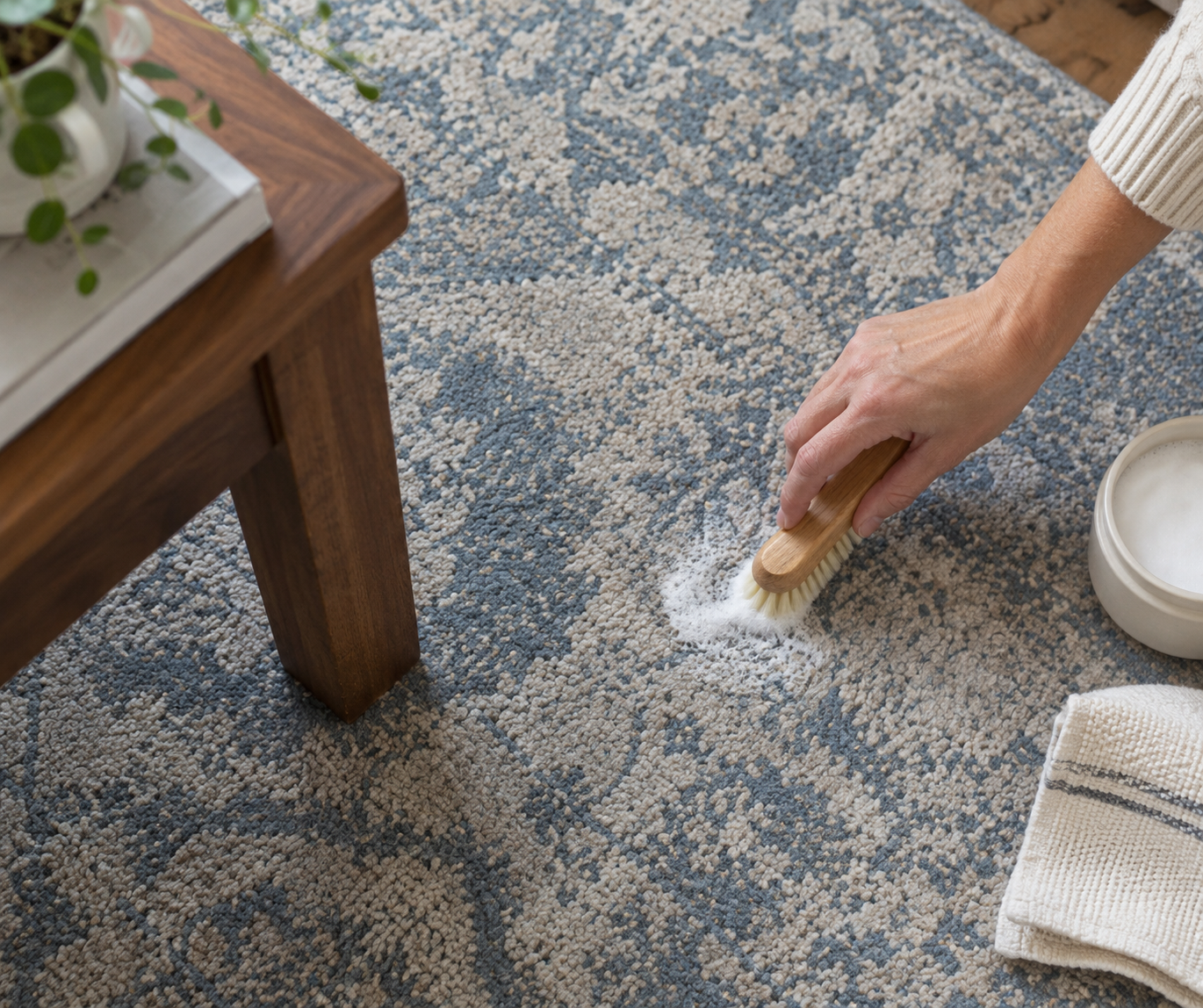
A repeatable routine is safer than occasional aggressive cleaning. For a fresh drink spill, blot from the outside toward the center with a clean white cloth; for a solid spill, lift as much material as possible with a dull tool before adding moisture. Never assume a popular home remedy suits wool, silk blends, natural dyes, or a carpet with a specialty treatment. Test a carpet-safe product in an inconspicuous area and avoid soaking the backing or pad. If a stain has an unknown source, an odor, or returns after drying, stop adding products and ask a carpet-care professional for a fiber-specific recommendation.
Drying is part of stain removal. After blotting and any approved treatment, press clean dry towels into the area and use airflow so moisture does not remain in the backing. Do not apply high heat unless the carpet maker permits it. A spot that feels dry on top may still need more time before furniture or a rug is returned.