How to Organize a Small Kitchen Without Buying Expensive Storage
Explore another practical home organization guide.
Home Organization
The best drop zone follows the route people already take.
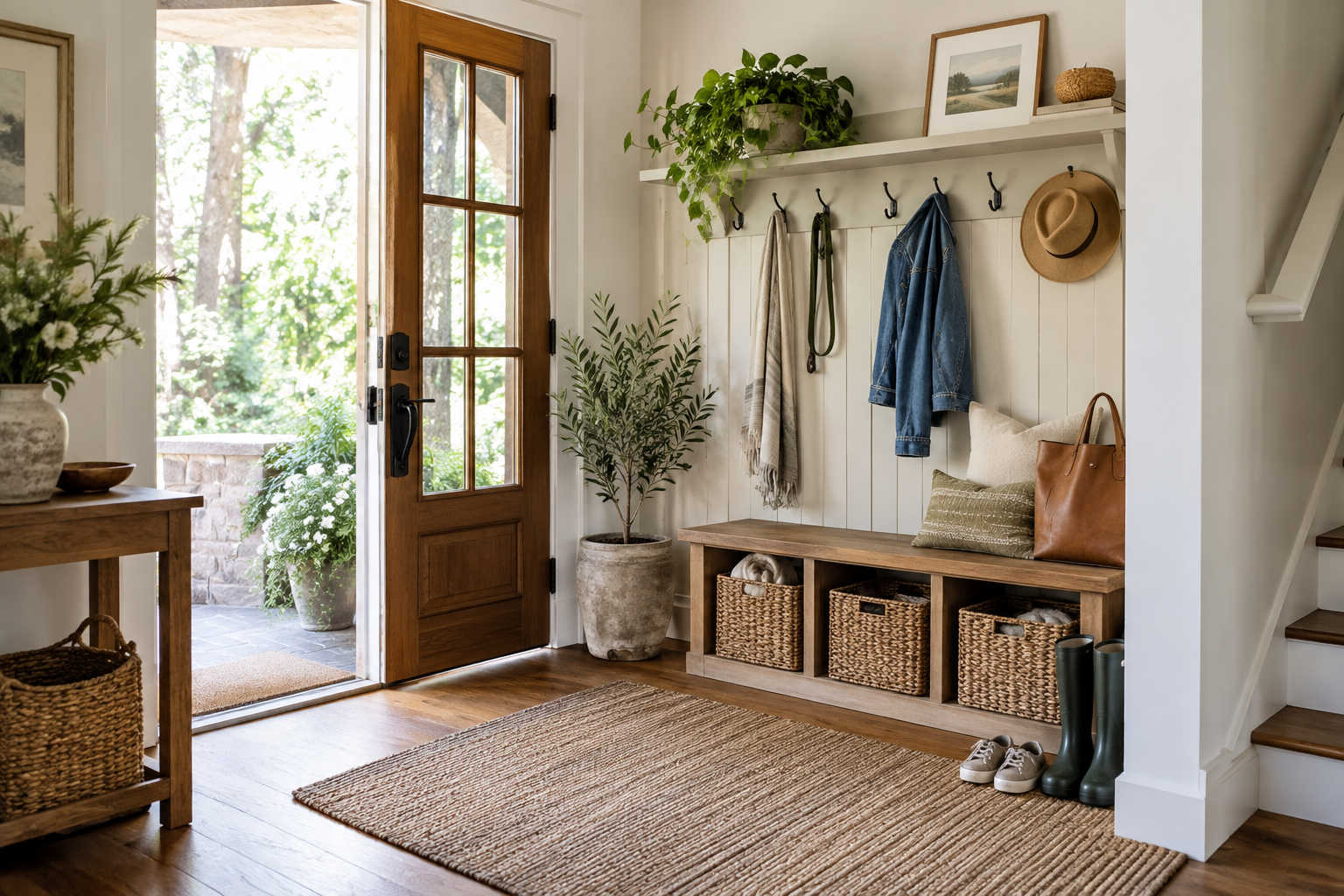
An entryway drop zone is a small landing place for the items that otherwise travel through the house: keys, bags, shoes, mail, coats, and things that need to leave again. It works when it follows the route people already take, does not block the doorway, and gives each frequent item an easy return point. The goal is not to build a miniature mudroom. A hook, tray, basket, and clear floor path can be enough.
For a few days, notice what lands nearest the entrance. Include the items that create the most friction: keys searched for in the morning, shoes that become a tripping hazard, wet umbrellas, backpacks, parcels, pet leads, and mail. Measure the available wall, floor, and door-swing clearance before buying anything. A shallow area beside the door may suit hooks and a narrow tray, while a wider hall may hold a bench with open shoe storage below.
Decide which items deserve a permanent place and which should move onward. Keys and everyday bags may stay; mail should be sorted quickly rather than accumulating; wet gear needs a drying location; and items for donation, returns, or a school event can use a temporary outgoing basket. Limit the zone to arrival-related items. If it becomes a home for every object without a category, it recreates the clutter it was meant to prevent.
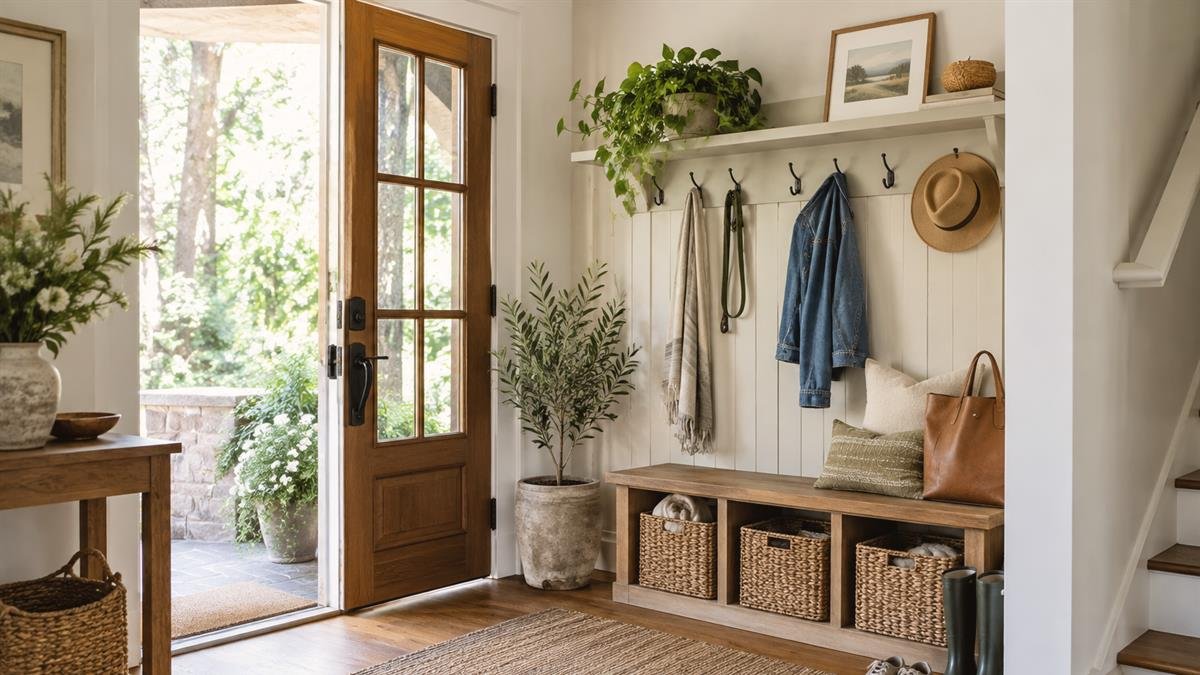
Keep exits, stairs, radiators, electrical panels, and door swings clear. Do not put a shoe rack where someone must step around it in the dark. A wall-mounted hook rail can be safer than a freestanding coat stand in a narrow hall, provided it is installed into suitable support and used within its weight limit. For renters, removable hooks or an over-the-door organizer may work, but check that the door still closes and that the hardware will not damage the surface.
Use a tray for keys and small daily items, placed where it can be reached without setting bags on the floor. A low, washable mat or tray for shoes can contain dirt and water. Keep only the pairs currently in use at the entrance; the rest belong in a closet or bedroom. If umbrellas are common, use a stable container that will not tip and empty it after wet weather. Good lighting and a clear walking path matter more than decorative storage.
In a family home, assign a hook or basket by person only when it reflects the routine. A child’s backpack and coat should be reachable at their height; a label or photo can help younger children. In a shared apartment, agree on a limited amount of communal floor and wall space before adding furniture. In a no-closet apartment, a narrow bench, hooks, and a lidded basket may create enough function without taking over the living room.
Plan for pets and weather as well. Keep leads, waste bags, towels, or reflective gear together if they are used at every walk. Give wet boots and jackets a place to dry that does not create mildew against a wall. Avoid storing cleaning chemicals in an open entryway basket. If a parcel is left near the door, move it after opening so it does not become an obstacle or advertise valuable deliveries.
At night, return keys to the tray, hang coats, place shoes in their designated space, and put outgoing items in one basket. In the morning, take only what is needed. This is easier than a large weekly clean because the zone remains small. If mail builds up, add a brief sorting rule: act, file, recycle, or move it to the person responsible. Do not treat the entryway as a long-term paper archive.
Review the setup after two weeks. If bags still land on a chair, the hook may be too high or too far from the route. If shoes spread into the hall, reduce the number allowed in the zone or improve the storage elsewhere. Change the placement before buying more containers. The right drop zone is the one that makes returning home and leaving again noticeably calmer.
An entryway collects grit, water, and the debris that comes in on shoes. Choose a mat that can be shaken, vacuumed, or washed according to its material, and use a surface beneath shoes that can be wiped rather than a fabric bin that holds moisture. Sweep or vacuum the immediate area regularly so dirt does not travel into the rest of the home. During wet weather, check the area more often and allow footwear to dry before storing it in a closed cabinet.
Keep the cleaning tools for this small task nearby only if they can be stored safely and discreetly. A compact broom, dustpan, or washable cloth may be sufficient. If the entrance is shared with a kitchen or living area, avoid leaving wet items on a path where people carry food or hot drinks. A small amount of routine maintenance protects both the floor and the usefulness of the system.
Rotate bulky coats, boots, sports equipment, and seasonal accessories out of the drop zone when they are not in use. Before guests arrive, clear the floor and leave a few open hooks or a temporary basket rather than moving household belongings into another visible pile. The system should expand briefly for a rainy day or a visit, then return to its normal capacity. That flexibility makes a small entrance feel hospitable without needing permanent furniture for every possible situation.
Keep the zone modest, visible, and easy to reset. That is the durable standard for a small entryway.
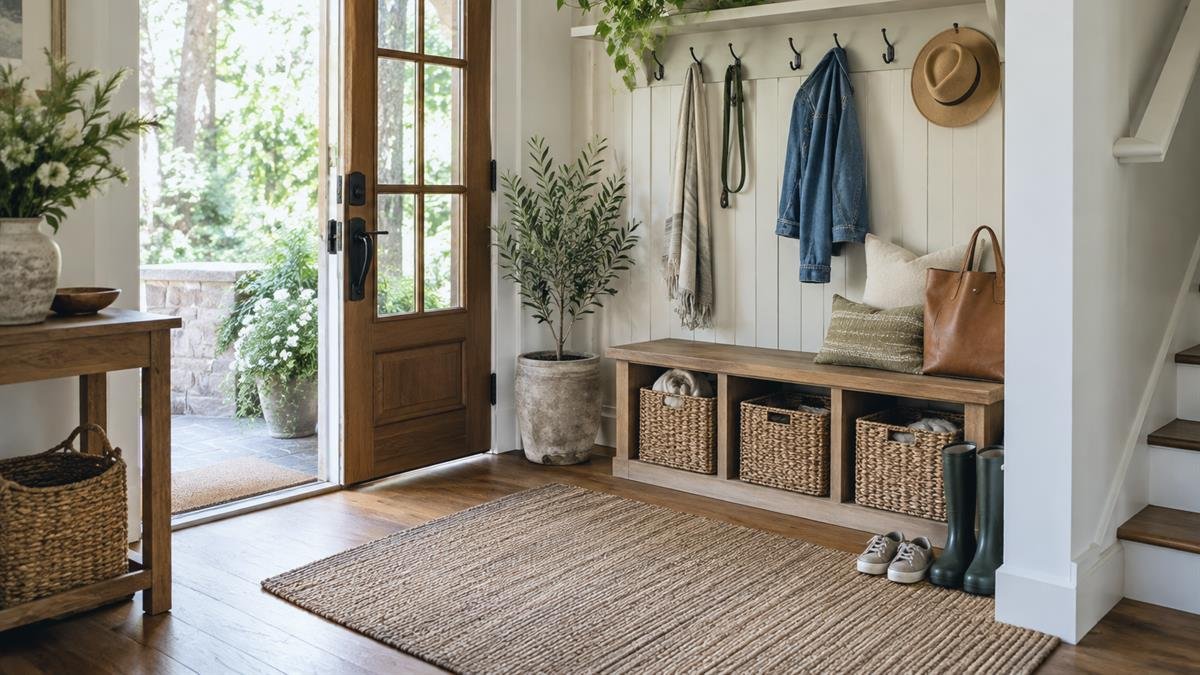
An entryway earns its place when it clears the path within minutes of arriving home. Watch what lands on the floor for a week, then give that specific item—wet shoes, mail, a backpack, or a dog leash—a simple home that does not block the door.
Review the zone when weather, school, work, or household routines change. Winter coats, umbrellas, muddy shoes, and sports equipment need more drying space than summer bags and keys, so do not expect one basket to handle every season. Put wet footwear on a washable tray that can be emptied, and keep it away from electrical outlets and the path of a door. For children, use hooks or bins they can reach; for visitors, leave one clear temporary surface instead of asking them to find a family member's assigned container. A narrow bench can be helpful only if it leaves enough room to pass safely. If the entrance becomes a dumping ground again, reduce the categories rather than adding labels: one place for keys, one for bags, one for shoes, and a short routine are usually enough.