How to Declutter Your Home Room by Room Without Feeling Overwhelmed
Explore another practical home organization guide.
Home Organization
A small kitchen feels better when every frequent task has a clear home.
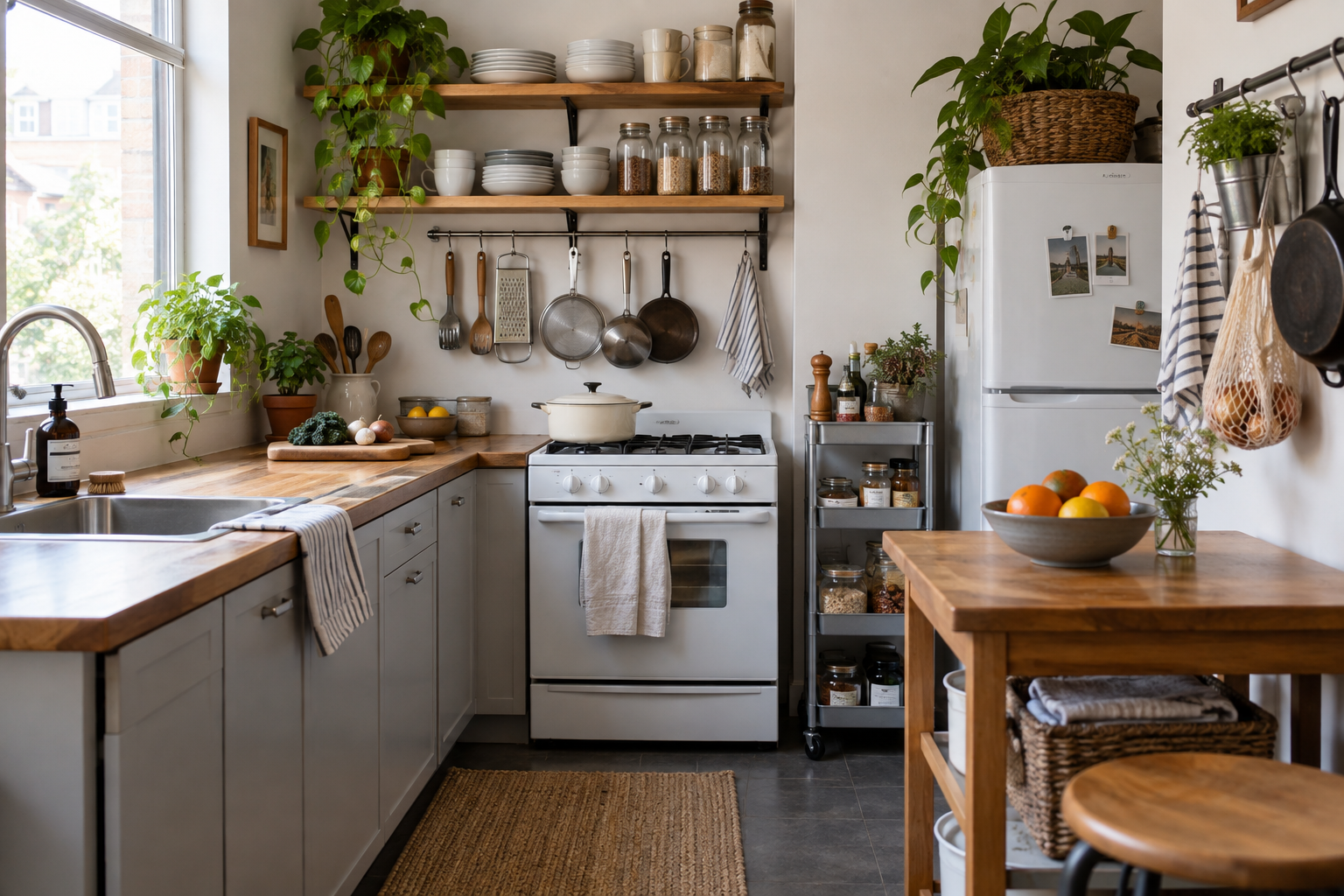
A small kitchen does not need a dramatic storage makeover to work better. It needs fewer obstacles between an ordinary task and the tools used to finish it. If the coffee items are scattered, the cutting board blocks a drawer, or groceries have no landing place, clutter returns even after a thorough tidy. Organize around the way you cook, clean, and unpack—not around a showroom image.
For several days, notice the moments that slow you down: where you set grocery bags, which drawer you open while cooking, what you carry across the room, and what piles up near the sink. Measure the shallow drawers, cabinet shelves, and the free counter space with a tape measure. A divider or bin that is only slightly too large creates a new frustration, so dimensions matter more than a product’s label.
Empty one small zone at a time, such as the utensil drawer or the cabinet beside the stove. Wipe it, group its contents, and discard or relocate what belongs elsewhere. Keep duplicates only when they solve a real simultaneous-use problem. A dozen mismatched spatulas do not make a small kitchen more flexible; they make it harder to find the one that works.
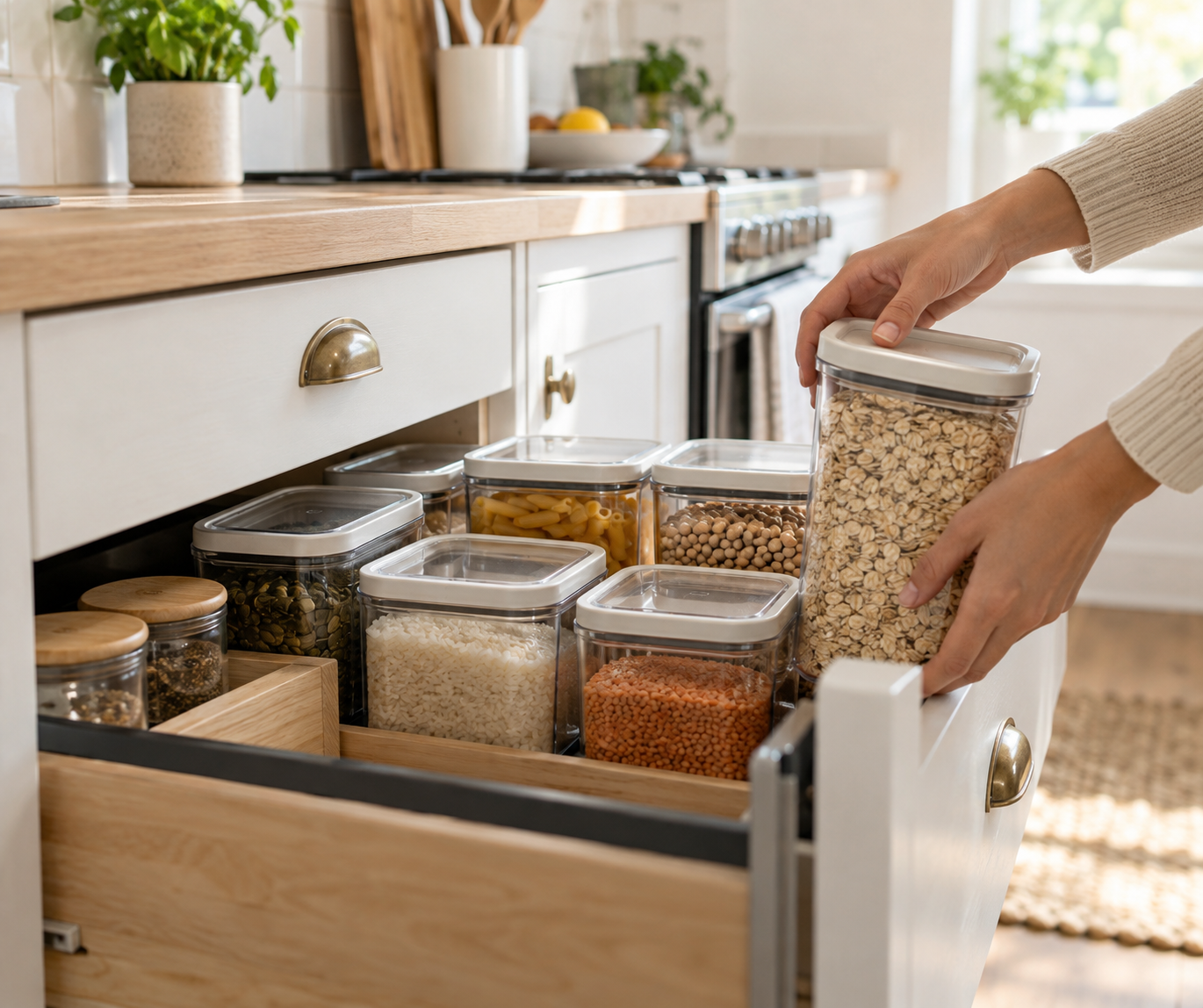
Create a prep zone near the largest clear counter area: knife, cutting board, measuring tools, mixing bowls, and everyday seasonings should be reachable without crossing the room. Store pots, pans, and oven mitts near the stove; keep dishes, glasses, and flatware close to where they are unloaded or used. Cleaning supplies that are safe to store in the kitchen can live near the sink, but keep them separate from food and out of reach of children and pets.
Use the highest shelves for seasonal serving pieces, spare appliances, and backup stock. Reserve the easiest shelves and drawers for items used several times a week. This “prime real estate” rule matters more than matching containers. A blender used every morning deserves an accessible place; a specialty cake pan can live higher up. If an item is awkward to lift or requires moving three others, it is not in a practical daily location.
Simple containment prevents loose items from spreading. Repurpose a shallow box as a drawer divider, use a tray to gather oils and vinegars, or stand baking sheets upright with a tension rod or an inexpensive file organizer sized for the cabinet. Before adding anything, make sure cabinet doors and drawers still close freely. Use nonslip shelf liner only where it solves a sliding problem; it should not become another surface that traps crumbs.
Give the pantry clear, broad categories: breakfast, dry staples, snacks, baking, and backstock may be enough. Put the oldest food toward the front when restocking. Decanting is optional, not a requirement. Original packaging retains cooking instructions, allergen information, and dates; clear containers are helpful only if they fit the shelf and are labelled with that information. Keep a small landing basket or tray for items that need to go elsewhere rather than allowing them to occupy food-prep space.
Counter space is working space, not permanent display space. Leave one section clear for unloading groceries or preparing a meal. Appliances earn a counter position when they are used often enough to justify it and can be operated safely there. Keep cords away from the sink and stove, do not overload power strips, and leave ventilation space around appliances according to their instructions. Store knives securely, keep heavy pans on low shelves, and avoid tall stacks that can fall when a cabinet is opened.
Use the kitchen through breakfast, a weeknight dinner, dishwashing, and grocery unpacking before buying storage products. Notice where items migrate; that is usually evidence of a missing zone or an inconvenient return path. Adjust one problem at a time. A five-minute evening reset—dishes handled, counters cleared, and food returned to its zone—is easier to maintain than an elaborate monthly overhaul.
Make labels useful for everyone who uses the kitchen, especially on opaque bins or high shelves. Leave a little empty space in each category so a new package can be put away without rearranging the whole cabinet. The goal is not minimalism for its own sake. It is a kitchen where daily cooking, cleaning, and putting things back require fewer decisions.
Before shopping, take a quick look at the refrigerator, pantry, and freezer so new food has a destination. Buy the amount of perishable food your available shelves and meal plan can hold, not the amount a large-store display suggests. At home, unpack in order: refrigerate and freeze perishable items first, put staples into their categories, then handle recycling and bags. This sequence keeps a small counter from becoming a temporary storeroom.
Keep a visible list of staples that run low often, but do not build a large backstock when space is tight. One backup of a frequently used item may be sensible; several backups can hide expired food and crowd out the ingredients needed for the week. Check dates while putting groceries away and use the oldest suitable item first. A small tray for lunch supplies or breakfast ingredients can speed one routine without creating dozens of tiny categories.
Use reversible changes first: removable hooks where permitted, a freestanding cart that does not block exits, or a drawer tray that can move with you. In a shared kitchen, agree on one shelf, one bin, or one clear rule before reorganizing another person’s food or tools. A system is successful when it respects access, safety, and the people who must use it every day.
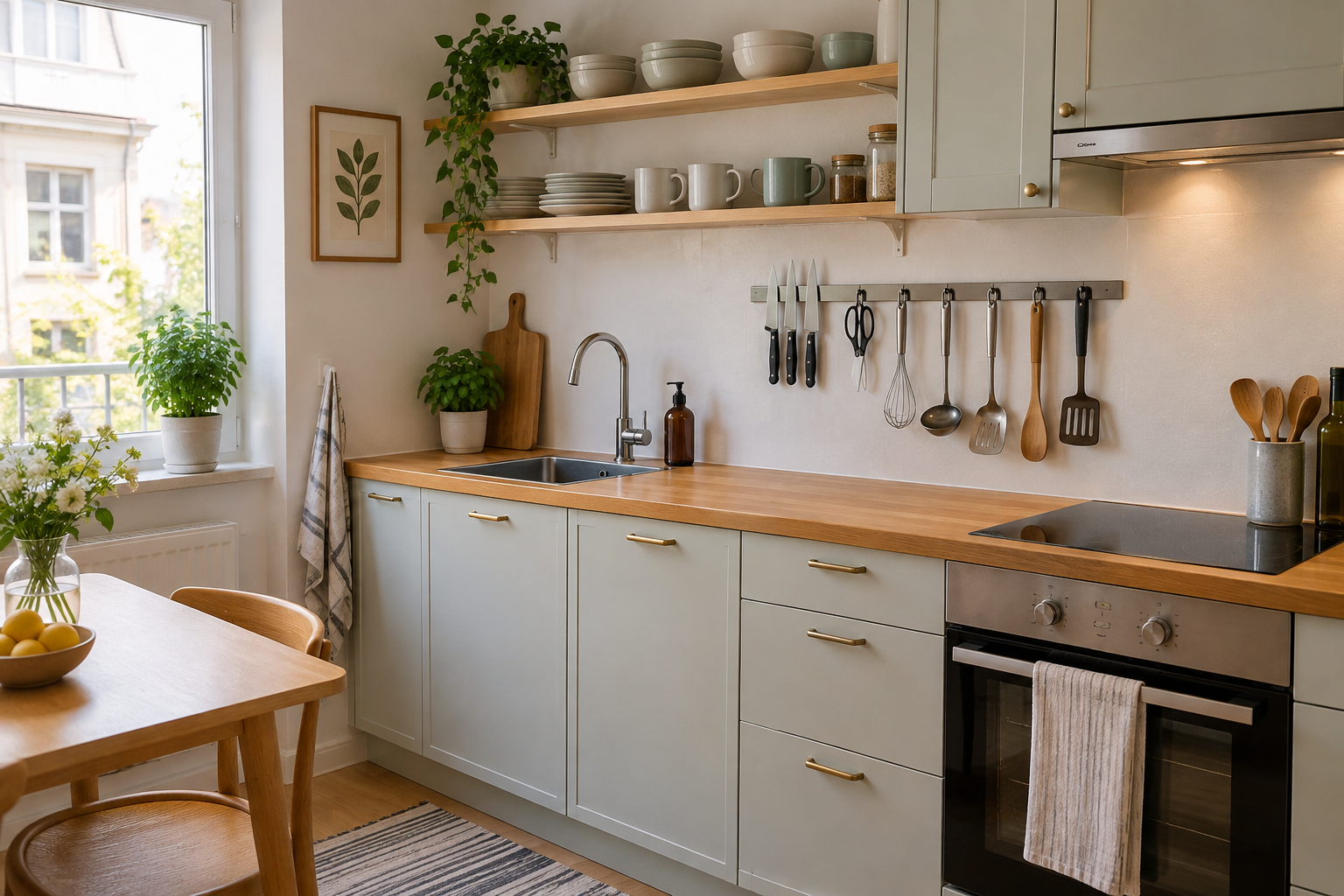
At the end of a busy week, notice the one kitchen task that still creates a bottleneck—putting away groceries, making coffee, or washing up—and move only the items involved. A small adjustment that shortens that route is more useful than adding another organizer.
Test the layout while preparing two ordinary meals, unloading groceries, and cleaning up afterward. If a cutting board must be moved three times before it can be used, store it closer to the prep area; if mugs accumulate by the sink, the cabinet may be too high or too far away for the people using them. Keep a heat-safe landing place for hot pans, a clear route between the refrigerator and work area, and a dedicated spot for sharp tools that children cannot reach. Measure a drawer before buying dividers, and leave some open space for an occasional large pot instead of creating a container for every object. The goal is not a showroom system; it is a kitchen where food can be prepared, stored, and cleaned up without creating a new pile each time.