How Often Should You Water Indoor Plants?
Read plant signals before reaching for the watering can.
Indoor gardening
An orchid does not need daily fussing. It needs a few conditions you can read, repeat, and adjust.
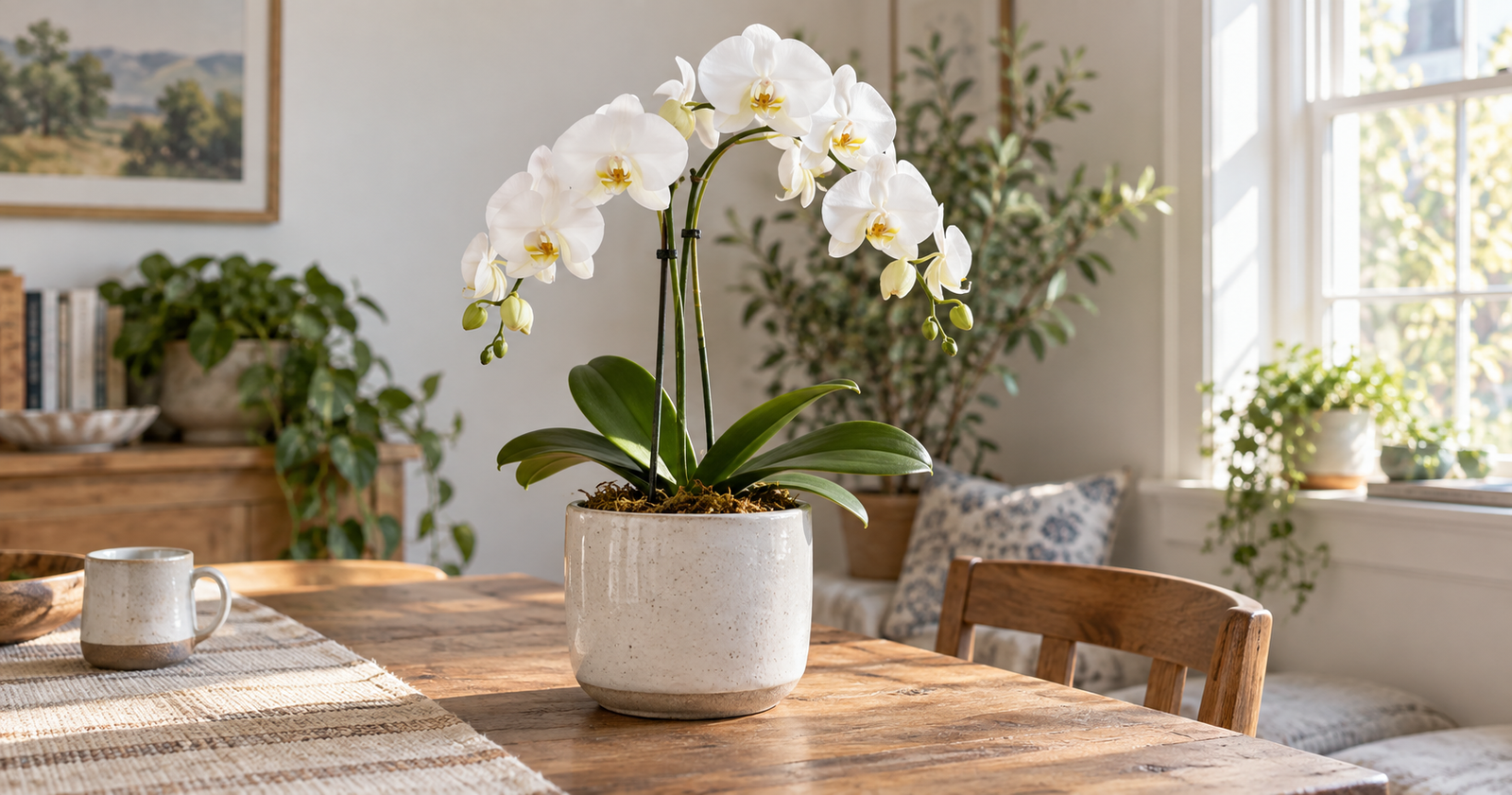
Orchids have a reputation for being difficult, mostly because they are often treated like ordinary houseplants. A moth orchid, the type most often sold in supermarkets and garden centers, grows in a loose, airy setting rather than packed garden soil. Once that difference makes sense, its care becomes much less mysterious.
This guide is written for a phalaenopsis orchid in a home. Begin with observation: look at the roots, feel the potting mix, and notice the light where the plant actually lives. That small pause is more useful than following a rigid watering calendar.
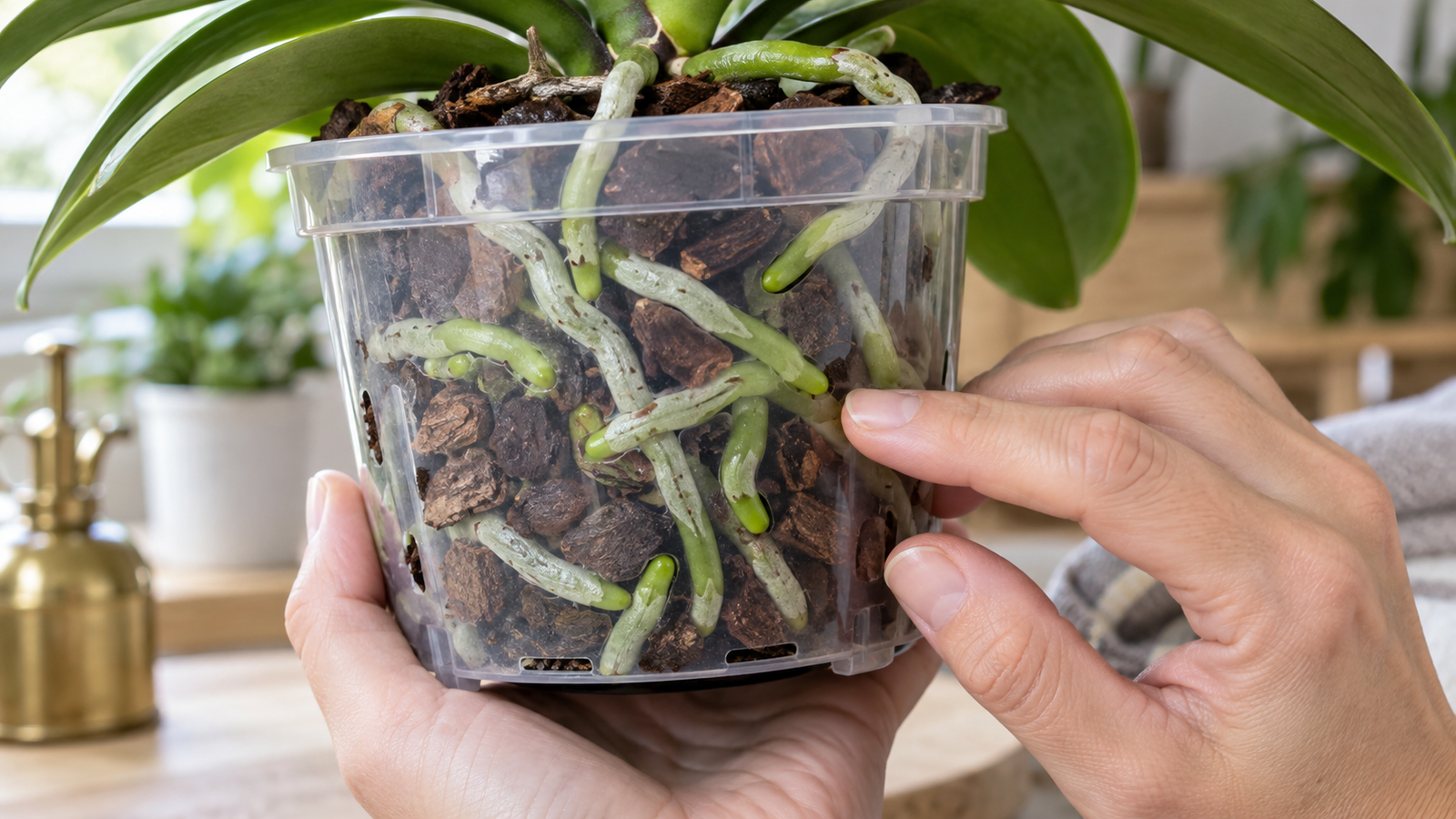
Healthy roots are usually firm. In a clear pot they may look green after watering and turn silvery as they dry. Leaves should feel substantial, not limp or wrinkled. These are clues, not a scorecard: a single yellowing older leaf can be normal, while several soft roots and a sour-smelling pot call for a closer look.
Place the orchid near an east window, or set it a little back from a bright south or west window behind a sheer curtain. Strong direct afternoon sun can leave pale or scorched patches. A plant that stays dark green but never produces a new spike may simply want a little more light.
The crown is the tight center where the leaves meet. After watering, blot away water that sits there with a tissue. Leaving it wet for long periods can encourage rot, especially in a cool room.
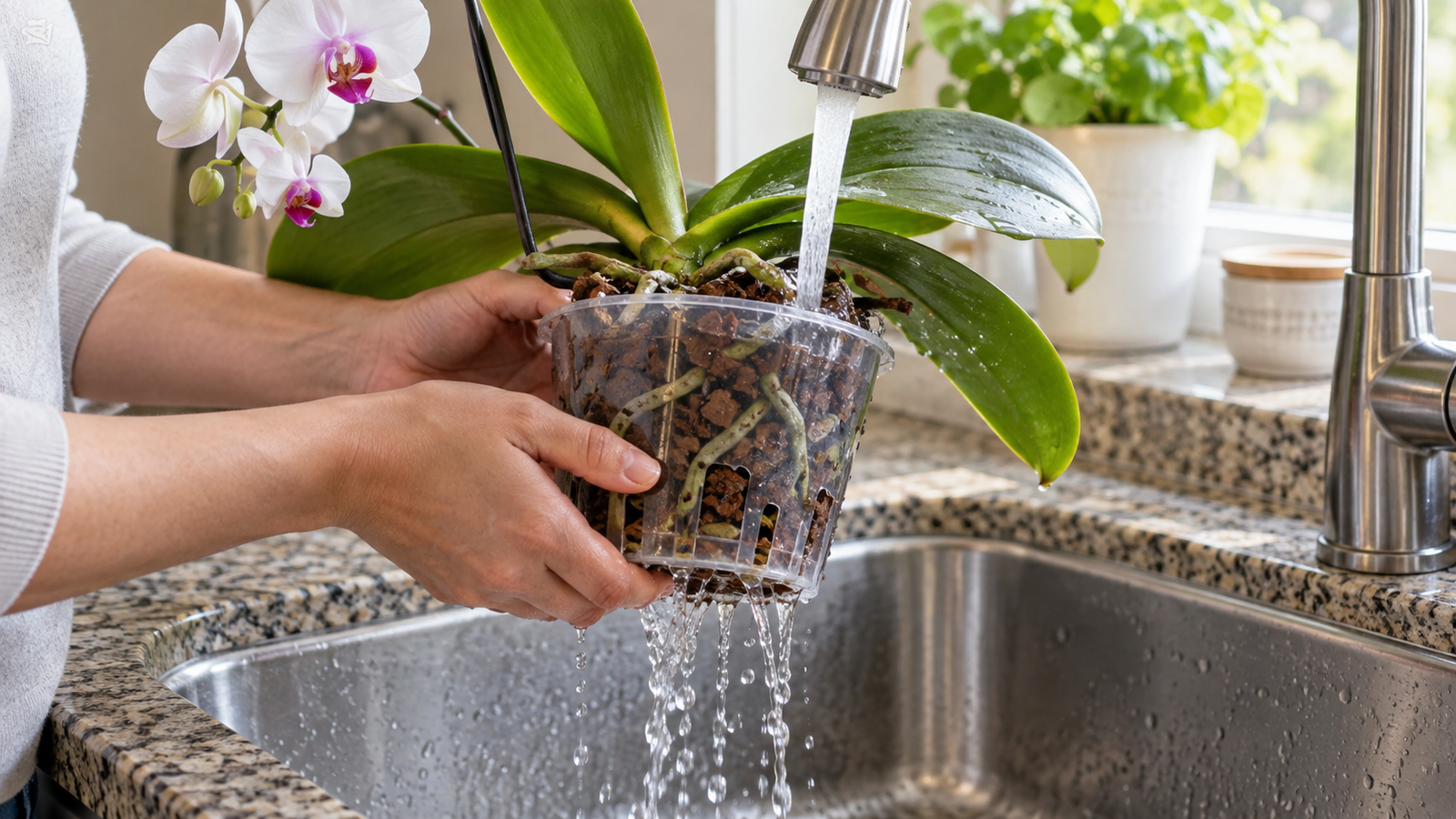
When the roots look silvery and the bark is nearly dry, carry the pot to the sink. Run room-temperature water through the mix for a minute, then let it drain completely. A decorative outer pot is fine only if you empty it before putting the orchid back.
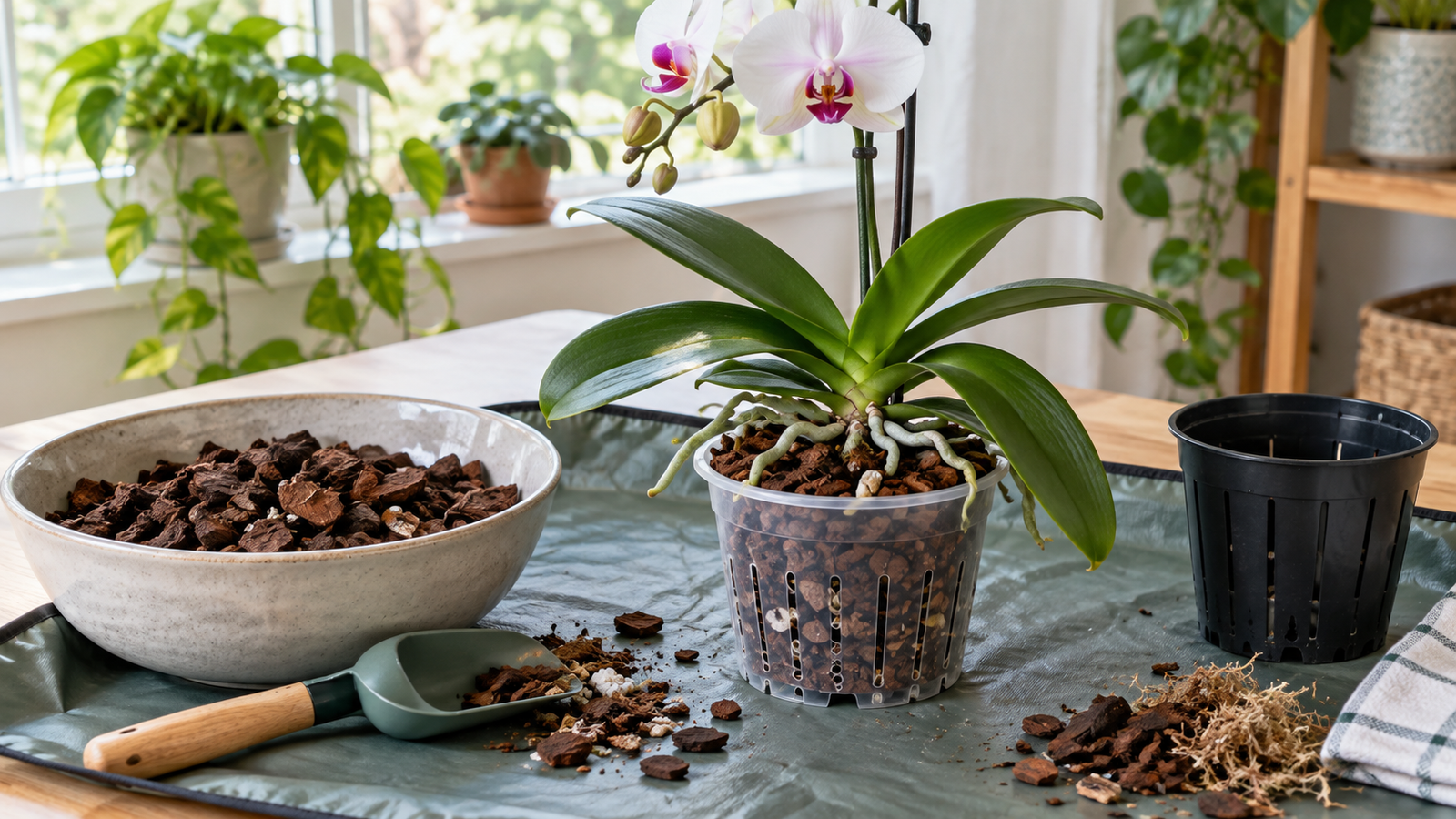
Orchid roots need air as well as moisture. A clear nursery pot with drainage holes makes checking both much easier. If you use a cachepot for looks, treat it as a cover rather than the planting container.
When new leaves or roots are growing, a balanced orchid fertilizer diluted according to its label can help. More fertilizer is not better; salts can build up in bark. Every few waterings, use plain water to rinse the mix well.
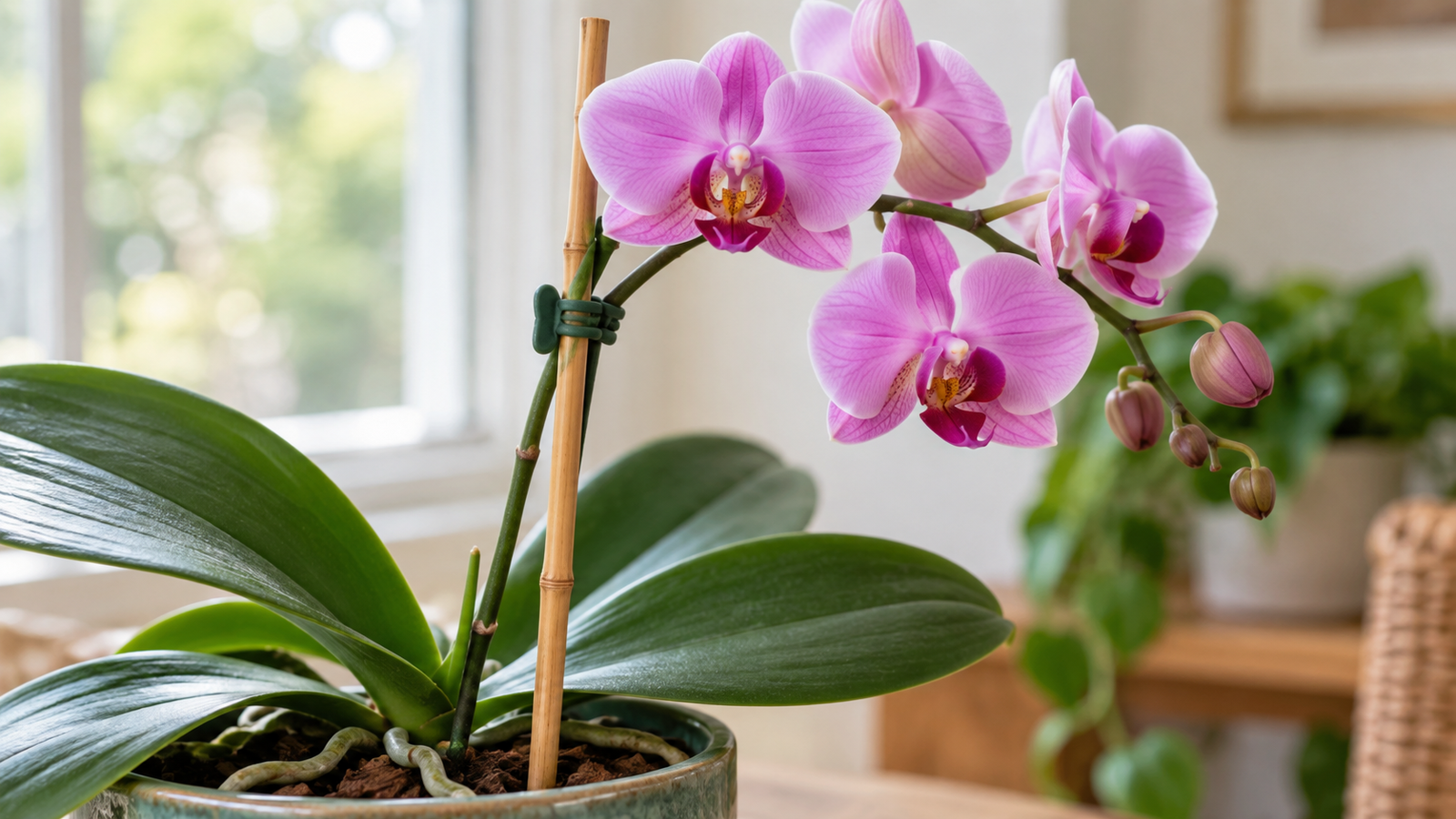
A bamboo stake and a soft clip can keep a heavy flowering spike from snapping. Do not pull the spike upright in one go. Guide it gradually and leave room for it to move.
Flowers do not last forever. When the last one drops, keep caring for the leaves and roots rather than assuming the plant has failed. You may trim a completely brown spike near its base; a green spike can be left for the plant to decide what to do with.
Most homes are suitable if the plant is away from a heating vent or a cold draft. If the air is very dry, grouping plants together can help. Avoid standing the pot in water; humidity trays work only when the pot remains above the waterline.
Bark slowly decomposes and holds too much water. Repot after flowering when the mix looks fine and crumbly, roots are overcrowded, or the plant has been in the same medium for a couple of years. Choose a pot only slightly larger than the root mass.
If leaves wrinkle, resist the urge to repot, fertilize, move, and water more on the same day. Check roots and the potting mix first. Then make one sensible change and give the plant time to respond. This is how you learn what works in your particular room.
Remove soft, black, or hollow roots with clean scissors when you repot. If the crown becomes mushy, isolate the plant from others and avoid more water in that area. Pests such as mealybugs can often be spotted in leaf joints; wipe small outbreaks away with a cotton swab and follow the product label if treatment is needed. When you are unsure what you are seeing, take a clear photo and ask a knowledgeable local grower or nursery.
A useful rule: An orchid can tolerate being a little dry more easily than sitting in stagnant water. Good drainage solves more problems than a complicated routine.
There is no dependable number for every home. In a warm, bright room it may be about weekly; in a cool season it can be much less. Look for nearly dry bark and silvery roots rather than watering automatically.
Yes. A healthy phalaenopsis often blooms again after a period of leaf and root growth. Bright indirect light, steady care, and slightly cooler nights in autumn can support the next flowering cycle.
No. Roots growing outside the pot are normal. Leave firm roots alone; trim only roots that are clearly dead or rotted when you are repotting.
The goal is not to make an orchid behave on a schedule. Give it clean drainage, comfortable light, and time to show you what it needs. In return, it becomes one of the most satisfying plants to keep: quiet for months, then suddenly full of flowers again.