How to Organize a Small Kitchen Without Buying Expensive Storage
Explore another practical home organization guide.
Home Organization
Small bathrooms improve fastest when only useful items stay within reach.
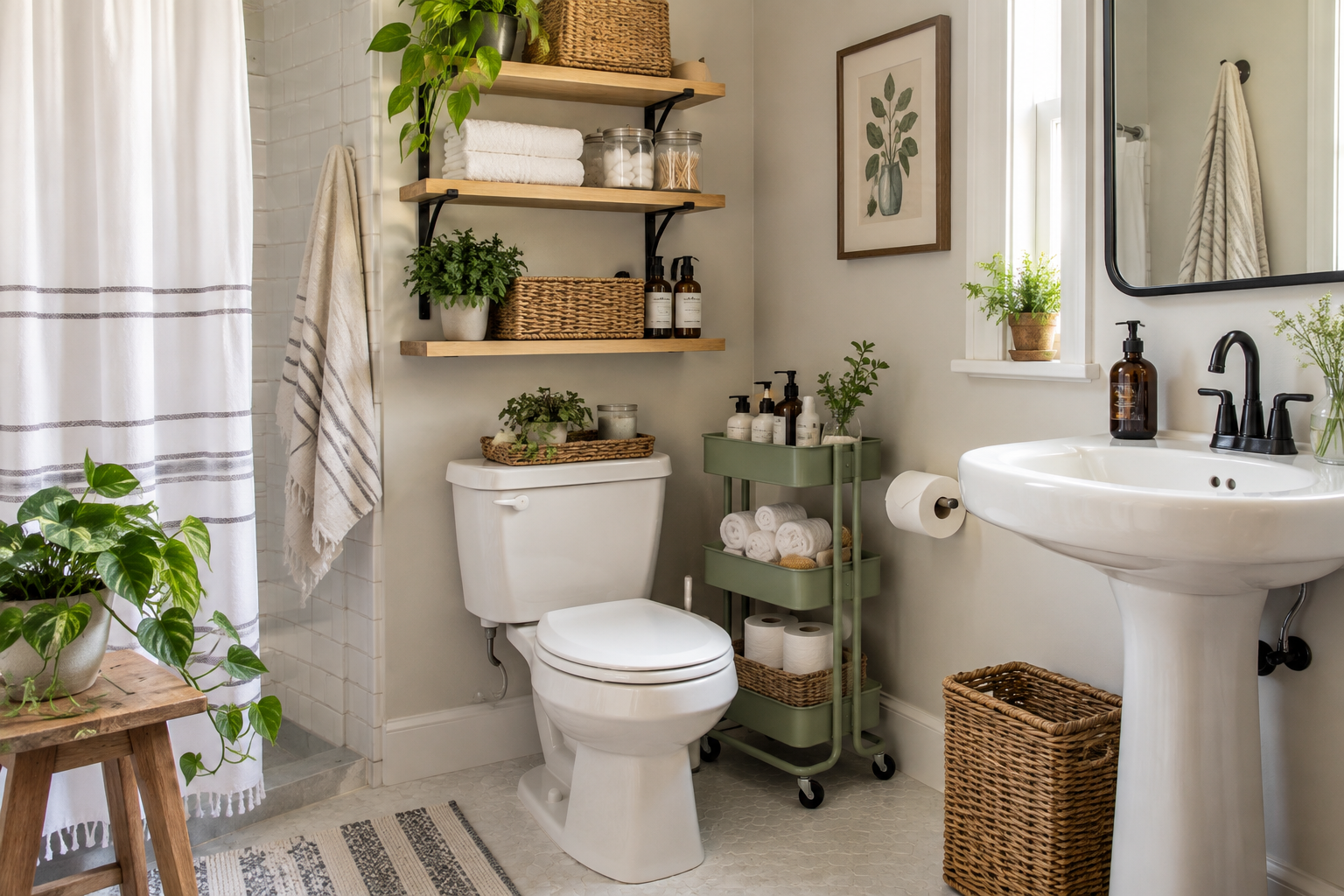
Small bathrooms work better when daily items are accessible, moisture-sensitive items stay dry, and storage does not take over the counter. Measure the space before buying a bin, reduce duplicates, and make decisions around the routines that happen here: washing, bathing, grooming, medicines, and cleaning.
Begin with the real friction point: notice what gets searched for, dropped, duplicated, or put back in the wrong place. Measure the area and try a temporary arrangement before purchasing organizers. For organize a small bathroom with limited cabinet space, the first step is to decide what a useful outcome looks like in this particular space.
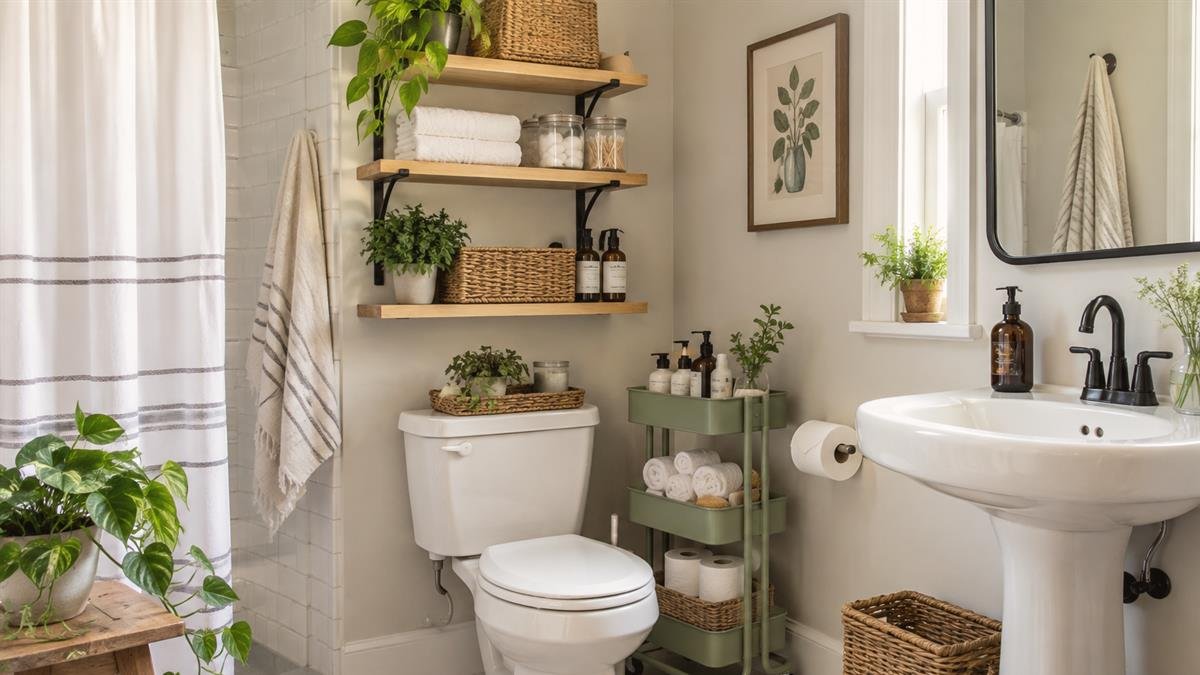
Start with the items you reach for most; they deserve the easiest access.
Test the new spot for a few days before buying another basket or divider.
Keep one category together so no one has to guess where it belongs.
Leave a little empty space; a system with no breathing room falls apart quickly.
Make the reset simple enough that another person can follow it without instructions.
Keep only the items needed for the routine in that location. A clear category, an easy return path, and a short reset are usually more durable than a complicated system with many tiny containers. For this project, return to the original purpose—vertical space and a restrained inventory—whenever a choice adds cost, complexity, or maintenance.
Avoid buying storage before deciding what must be stored, creating categories no one can maintain, or moving daily items so far away that they become clutter again. When in doubt, make one reversible change first and observe the result before adding another.
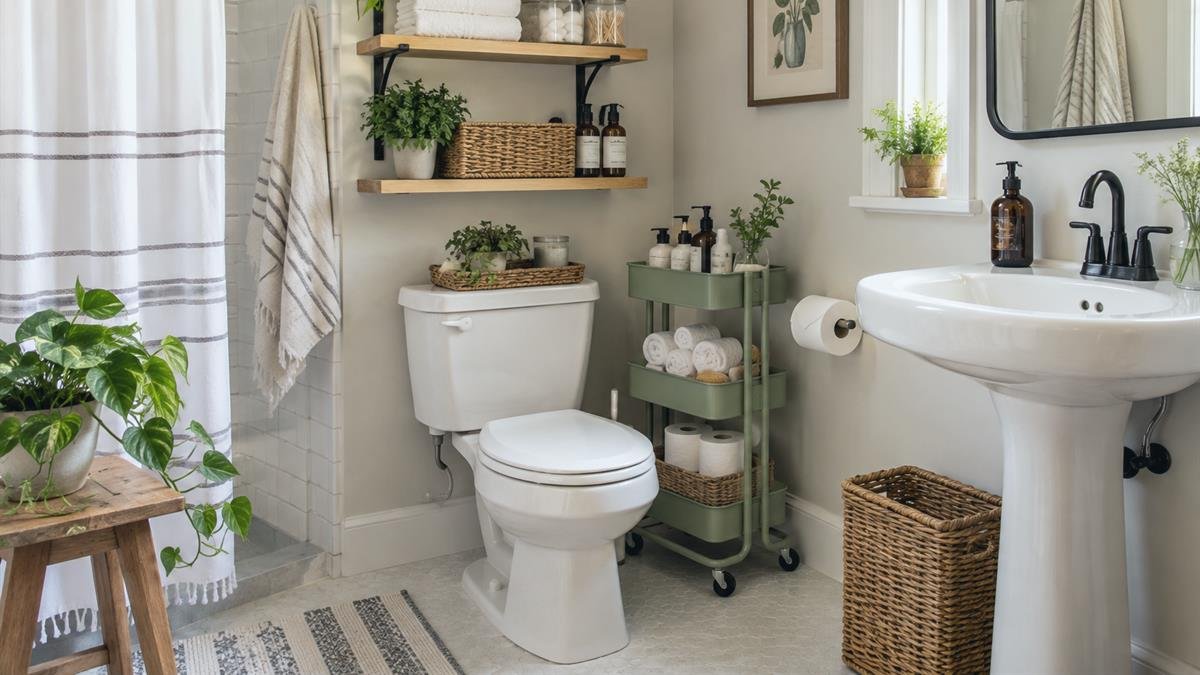
Use the bathroom for a full week, then change only the category that repeatedly lands on the counter or floor. A clear return point for each frequent item is more useful than adding another container.
Keep only daily-use toiletries at the sink, ideally in a shallow tray that can be lifted for cleaning. Put hair tools away only after they have cooled and dried. Group shower products in a stable caddy or shelf that does not obstruct the tub or create a slipping hazard. Keep extra bottles outside the bathroom if possible; a small bathroom is easier to clean when the shower edge and counter are not backup storage.
Use vertical space carefully. A narrow cabinet, wall shelf, or over-toilet unit can help only if it is securely installed, does not interfere with a toilet lid or door swing, and keeps heavy items low. In rentals, use reversible options where allowed and avoid overloading adhesive hooks. Clear walking space and a dry floor are more important than adding another organizer.
Follow medication labels and pharmacist guidance for storage. Heat and humidity can damage some products, so a bathroom cabinet is not automatically appropriate. Keep medicines in their original labelled containers, out of reach of children and pets, and dispose of expired medicines using local collection guidance rather than keeping an uncertain stock. Store razors, batteries, and electrical grooming tools where they stay dry.
Once a week, remove empty containers, check toilet paper and soap, wipe the tray under toiletries, and return stray items to their actual rooms. A small household can keep one backup of common supplies; a larger backstock usually belongs elsewhere. Check for leaks under the sink and damp towels or mats, because moisture problems become harder to solve when the cabinet is packed.
Use the shallowest drawers for small daily items so they do not disappear behind taller bottles. A simple divider can separate dental care, grooming tools, and cosmetics, but it should leave room to return an item without precise arranging. Reserve the easiest shelf for towels or toiletries used by everyone. Put bulky backup packages, spare linens, and rarely used tools in a closet or another dry storage space instead of forcing them into a damp cabinet.
For a narrow vanity, use the cabinet door only for light items if the hinges and door clearance allow it. Do not hang heavy containers from plumbing or place anything where it can interfere with shutoff valves. If pipes occupy most of the cabinet, a removable bin can make cleaning and leak inspection easier. Measure around the pipes before purchasing it, and never use storage to hide a persistent leak or mold problem.
In a shared bathroom, assign a modest basket, drawer section, or shelf to each person rather than spreading personal products across every surface. Label only where it helps; a household should not need a complicated code to put toothpaste away. If children use the room, keep their accessible items separate from medicine, razors, chemicals, and electrical tools. Give guests a small visible spot for a toiletry bag rather than asking them to balance it on the counter.
Store cleaning supplies outside the bathroom when possible. If one product must stay nearby, keep it labelled, secured, and apart from towels or toiletries. Do not mix cleaners or transfer them into drink containers. Follow the label for ventilation and surface compatibility, especially on stone, painted cabinets, and metal fixtures.
Every few months, check dates, wash the empty containers and bins, replace worn bath mats, and review what has not been used. Donate unopened, appropriate toiletries only where a local organization accepts them. Recycle empty packaging according to local rules. A bathroom with limited storage remains functional when each category has a small, maintained limit.
Finally, stand in the doorway and check the result. The counter should support washing, the floor should be clear, and every frequent item should have a safe, dry return point.
For shared bathrooms, assign each person a labelled shelf, drawer section, or small basket rather than scattering personal items around the sink. Keep guest supplies separate from daily products, and restock only after checking what is actually low. This prevents the room from becoming a storehouse for duplicate toiletries.