How to Organize a Small Kitchen Without Buying Expensive Storage
Explore another practical home organization guide.
Home Organization
Seasonal storage works when it is easy to retrieve and easy to put away.
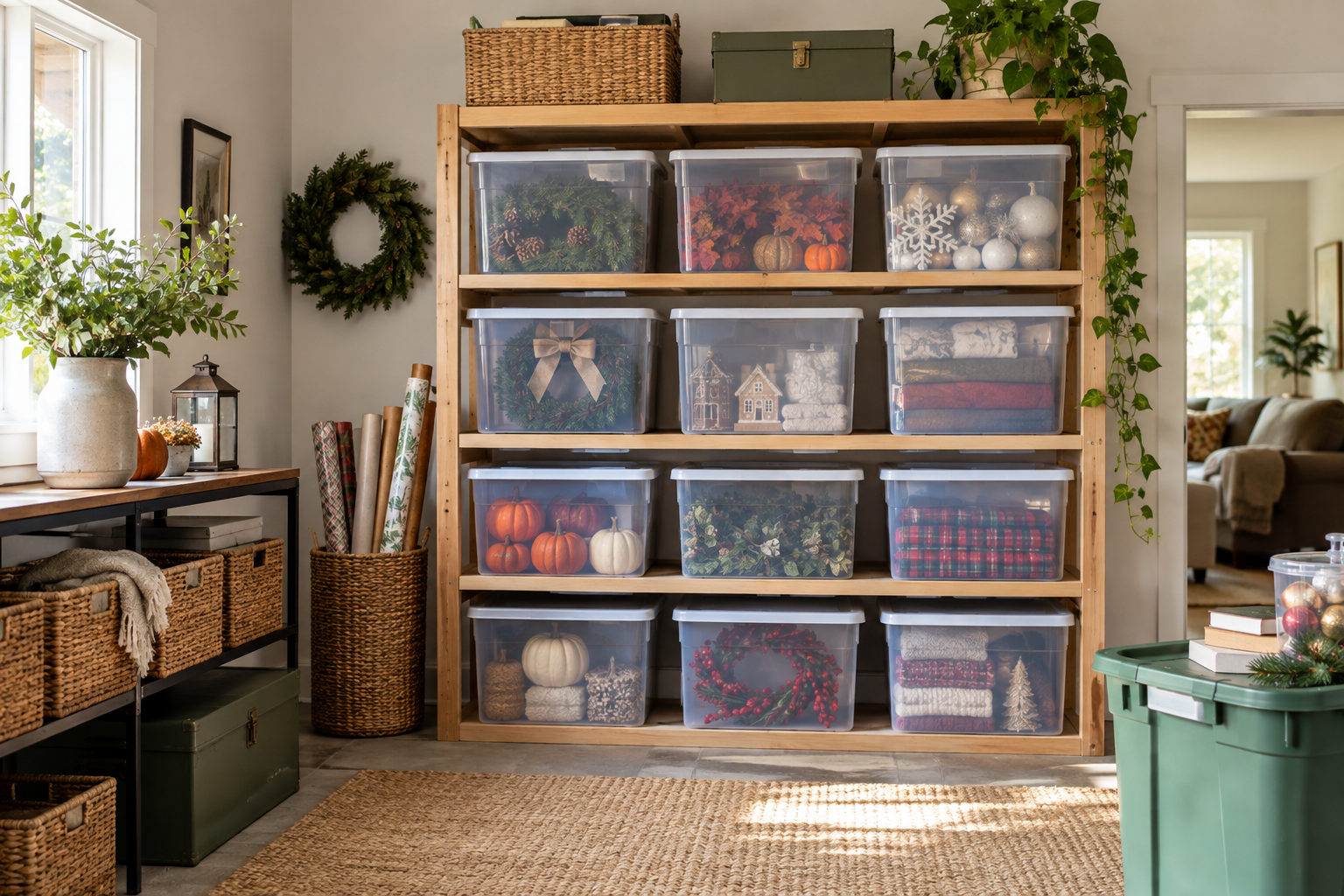
Seasonal decorations should take up only the space that matches their real use. A storage plan succeeds when it protects fragile items, makes favourite pieces easy to find, and does not turn a garage, attic, or closet into a maze. Begin at the end of the season while you can still remember what was used. Sort, clean, repair, and label before anything goes into a box.
Set aside broken lights, damaged inflatables, cracked ornaments, stained textiles, and duplicates that never leave the box. Test electrical decorations according to the manufacturer’s instructions before storing them; do not pack damaged cords for future use. Keep the pieces that create a meaningful tradition or are used regularly, but do not keep every inexpensive replacement simply because it was once purchased. A smaller, usable collection is easier to protect and more likely to be enjoyed.
Sort by a practical retrieval category: one holiday, one season, or one area of the home. A separate “outdoor lights” box may be more useful than a box labelled only “winter” if installation is a separate task. Take a photo of a finished display if it will help with setup next year. Place a simple inventory card inside each container with its broad contents and any missing or damaged parts.
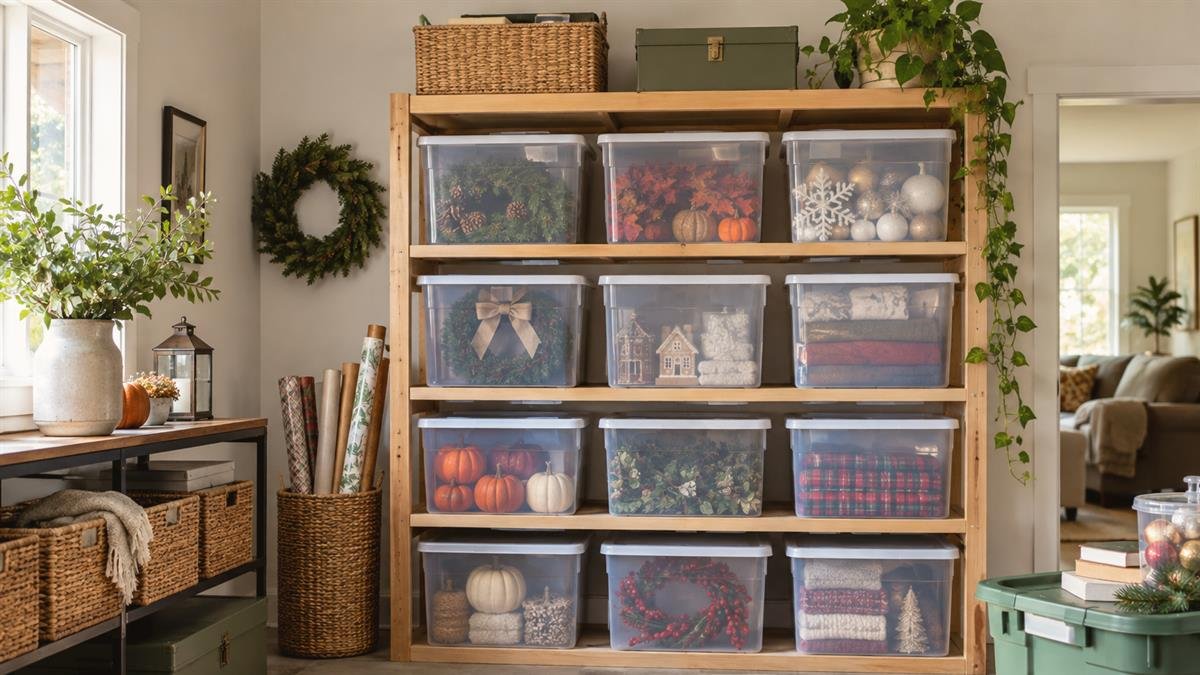
Use sturdy, dry containers with lids that fit for most décor. Wrap glass, ceramic, and delicate ornaments individually in acid-free tissue or clean soft material, then place heavier pieces below lighter ones. Avoid packing fragile pieces so tightly that they touch when a box is carried. Artificial greenery should be clean and fully dry before storage; crush-resistant boxes or bags can help it keep its shape. Store fabric décor only after it is clean and dry to discourage pests and mildew.
Wind light strands around a reel, a piece of cardboard, or a purpose-made organizer so cords do not become a knot next year. Do not use a container that pinches wires or leaves plugs exposed to dampness. Remove batteries from battery-powered decorations before long-term storage to reduce leakage risk. Follow manufacturer instructions for any items with built-in electronics or special finishes.
Measure shelves and clear paths before stacking. Put heavy containers low, lighter containers higher, and keep the most frequently retrieved seasonal boxes between knee and shoulder height. Label at least two sides and the lid so identification does not require moving every box. Leave a small aisle in a garage or storage room; do not block electrical panels, heaters, vehicles, or exits. If a box is too heavy to lift safely, divide it into two smaller containers.
Garages, attics, basements, and sheds differ in temperature, humidity, and pest risk. Do not store paper, fabric, candles, or delicate electronics where heat, moisture, or pests are likely to damage them. A climate-controlled closet may be a better home for sentimental or fragile décor. Elevate containers off a basement floor if water is possible, but make sure the support is stable.
Keep a simple map in a note on your phone or on the inside of the storage-room door: the shelf, the season, and the number of containers. When decorating season arrives, retrieve only the boxes needed for the first stage rather than emptying everything. Put empty containers in one designated spot as you unpack. That prevents the garage from filling with loose lids, packing material, and half-open boxes.
At pack-away time, set a one-container limit for new purchases: if a new item comes in, decide where it fits and what it replaces. Donate clean, usable décor through a suitable local organization when accepted, recycle materials where local rules permit, and dispose of damaged electrical items through e-waste channels. The best storage limit is one that leaves room for the rest of the home to function.
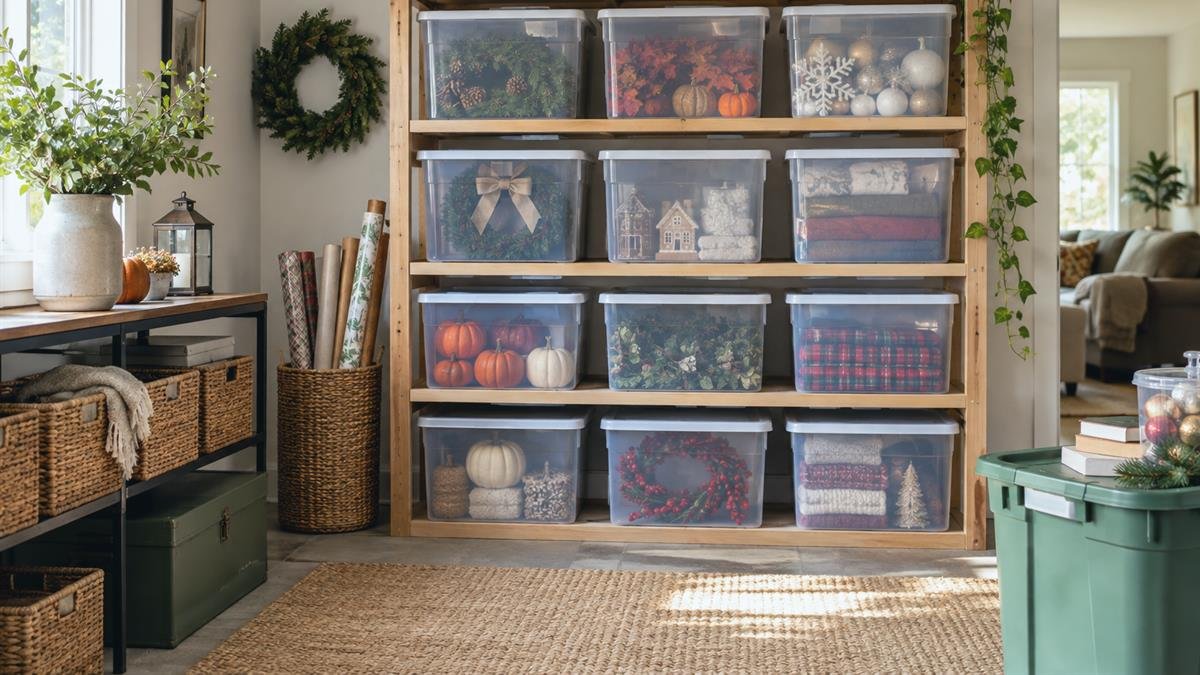
Give the collection a practical retrieval test before calling the job finished: one person should be able to identify the correct container, lift it safely, and find the needed items without opening every box.
Check the storage area on a humid day and after heavy rain. A musty smell, condensation, water marks, or pest droppings are signals to solve the environment before adding more containers. Clean and dry the space, repair the source of moisture where possible, and avoid putting cardboard directly on a damp floor. Use containers with sound lids for items vulnerable to dust or pests, but do not seal anything while it is damp. Silica-gel packets can help inside an appropriate closed container, but they do not correct a wet basement or leaking roof.
Heat can be just as destructive. Candles may soften, adhesives can fail, and some plastics become brittle in an attic or shed. Keep irreplaceable photographs, heirloom ornaments, delicate textiles, and electronic décor in the most stable indoor location available. If a decoration has sentimental value but is too fragile for regular use, photograph it and decide whether careful display, professional conservation, or secure storage is the better role for it.
Place setup tools, hooks, extension accessories, and instruction cards near the top of the appropriate box. Pack room-by-room décor together when the same display is recreated every year, or pack by material when protection is the main concern. Use a final “first out” container for the items needed at the beginning of setup, such as a tree stand, mantel hooks, or outdoor timers. This prevents opening every box to find one small component.
Finish with a five-minute review: lids secure, labels visible, batteries removed, and containers returned to the recorded shelf. This small closing routine protects the work and makes the collection easier to enjoy next season.
Review your storage map annually and reduce anything that no longer earns its space. Before packing delicate ornaments, remove batteries from lights and devices, untangle cords, and note any item that needs repair before the next season. Use acid-free tissue or clean soft paper for fragile finishes rather than newsprint, which can transfer ink or moisture. Avoid sealing items that are still damp from outdoor use, and keep decorations off a floor that can flood or collect condensation. A garage, attic, or shed may have wide temperature changes, so choose a more stable indoor location for photographs, candles, heirloom textiles, or adhesives that can warp, melt, or become brittle. These choices protect the collection and make the next setup calmer than the last-minute search for one missing box.