How to Choose Paint Colors That Work Together in a Room
Explore another practical decor & diy guide.
Decor & DIY
Art feels intentional when it relates to people and nearby furniture.
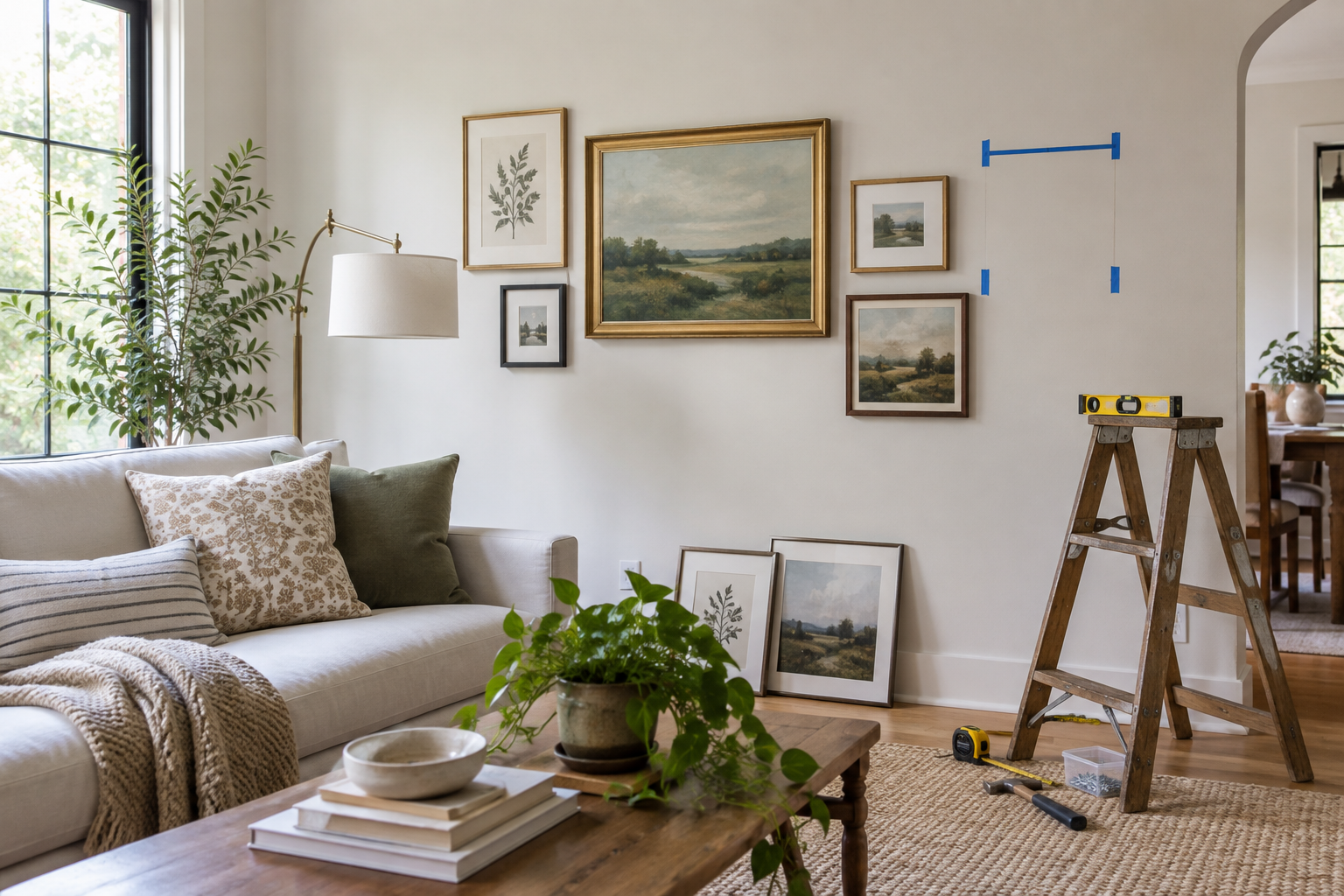
Art feels intentional when it relates to people and nearby furniture. A successful update starts with proportion, existing materials, and daily use. Small changes work best when they solve a visible problem rather than copy a temporary trend. In this guide, the practical focus is sight lines, proportions, and secure mounting.
Wall art usually looks right when its center relates to the people viewing it and to the furniture beneath it. A common starting point is placing the center of a single piece around 57 to 60 inches from the floor, but this is a guideline, not a rule. Seated rooms, high ceilings, tall furniture, and grouped art all change the decision. Plan the composition first, then choose hardware that suits both the artwork and the wall.
Measure the area, inspect the surfaces, and decide what must remain functional. Start by testing a painter’s-tape outline at the intended height beside the furniture below. For hang wall art at the right height, the first step is to decide what a useful outcome looks like in this particular space.
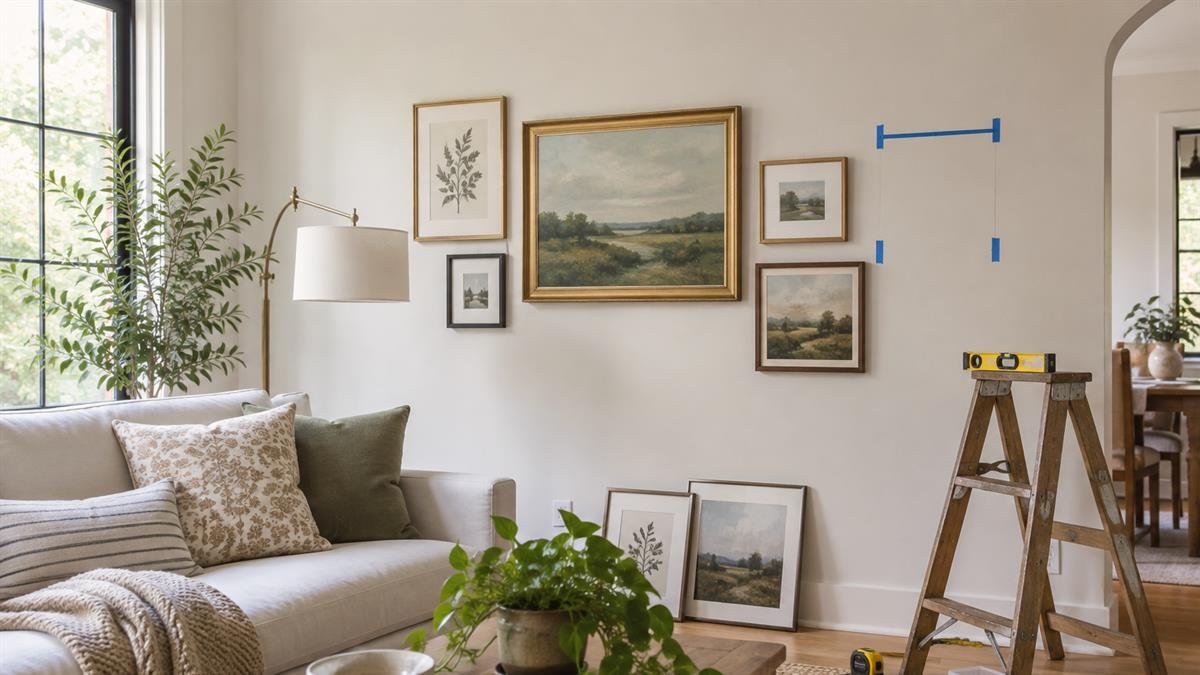
Use painter’s tape, paper, or a temporary arrangement before making a permanent change.
Stand back across the room; proportion is easier to judge from a few steps away.
Keep the route through the room clear while you work.
Choose hardware and materials for the actual surface, not just for the look you want.
Live with the change briefly before adding another layer.
Choose materials and fasteners for the actual wall, floor, or cabinet rather than appearance alone. Keep the work focused on the wall material, hanger rating, and a clear work area; pause before any change that affects building systems. For this project, return to the original purpose—sight lines, proportions, and secure mounting—whenever a choice adds cost, complexity, or maintenance.
For a single piece on an open wall, mark the proposed center height with painter’s tape and view it from the usual doorway and seating position. Above a sofa, console, bed, or mantel, treat the art and furniture as one composition. Leave a deliberate gap rather than placing the art so high that it appears disconnected; the exact spacing depends on the frame and furniture height. Large pieces can sit lower than the general center-line guideline when they are visually anchored to furniture.
For a gallery wall, arrange paper templates or the framed pieces on the floor first. Choose one shared feature: a center line, a consistent outer edge, or an even gap between frames. Keep gaps modest and consistent so the group reads as one arrangement. Take a photo of the floor layout, then tape paper templates to the wall and adjust before making holes.
Check the frame’s hanging points and its actual weight. A small lightweight frame may need a different solution from a mirror, large canvas, or heavy glazed piece. Locate suitable support where possible and use hardware rated for the wall type and load. Drywall, plaster, masonry, and stud walls require different anchors. Do not rely on a decorative nail, a damaged hook, or an unverified adhesive for a heavy item.
Use a level after marking the final hardware position, not only after the picture is hanging. Remember that the hanging wire shifts the location of the hook: measure from the top of the frame to the tightened wire or hanger point before drilling. Keep art away from places where a falling frame could injure someone, and avoid drilling where wiring, plumbing, or building systems may be present. Seek qualified help when the wall type or load is uncertain.
Review the lease before drilling and retain written approval for any nonstandard mounting. Removable strips or hooks can work for lightweight art only when the product, wall surface, and removal directions are compatible. Test an inconspicuous area and do not use them on damaged paint, textured walls, or heavy frames beyond the stated rating. Keep original hardware with the artwork and photograph the wall before and after installation for move-out records.
Before choosing a frame, look at the width of the furniture or wall zone it will serve. A very small piece above a wide sofa can feel lost, while one oversized piece may crowd a narrow wall. Grouping several smaller works can create enough visual presence when one large piece is not available. Leave some breathing room around the composition; an empty wall is not automatically a wall that needs art.
Consider sight lines from adjoining rooms. Art near a doorway, stair, or narrow passage should not project into the path or have sharp corners at face height. In a dining area, view the composition from a seated position as well as standing. In a child’s room, use secure mounting and choose a height that is appropriate for both viewing and safety. Mirrors need the same weight and mounting attention as framed art.
Step back, sit down, and view the piece in daylight and evening light. Make a small adjustment if the group is visibly off level or disconnected from furniture. Keep spare paint, hardware details, and a photo of the back of a complex arrangement with household records. This makes future moves, repairs, and reinstallation easier without turning a simple decorating choice into a guessing task.
In hang wall art right height, verify dimensions at the installation point, select hardware suitable for the wall or item, and test the arrangement during normal use before making an irreversible change.
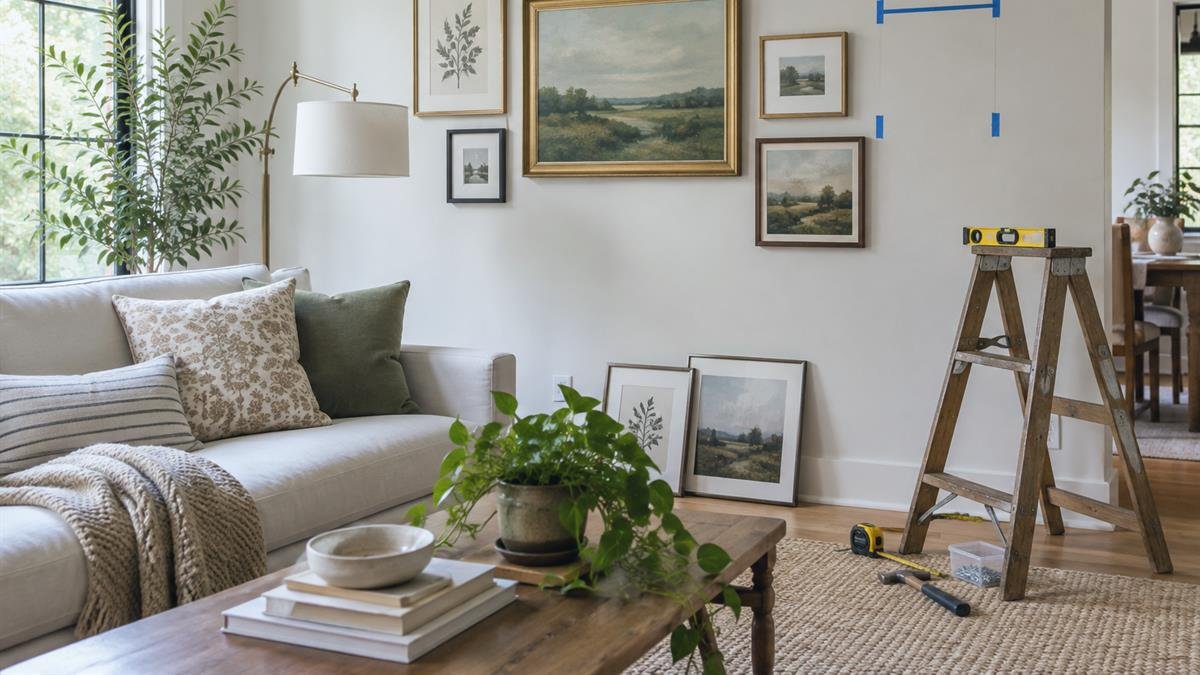
For ang all rt ight eight, judge the result after ordinary use: it should support the room's purpose without making access, cleaning, or maintenance harder.
A common starting point is to center art near average eye level, but furniture changes the decision. Above a sofa or console, treat the art and furniture as one visual group and leave a deliberate gap rather than floating it near the ceiling. Make paper templates, step back from the usual viewing distance, and check that doors, lamps, and tall plants will not compete with the piece. Use hardware rated for the wall and artwork weight; when the wall type is uncertain, seek appropriate advice.
For hang wall art right height, record the observation that changes the next decision: a leak, finish failure, unsafe access, persistent odor, or repeat damage. If a heavy frame, masonry wall, or uncertain electrical path is involved, seek the appropriate help rather than treating it as routine care.