How to Choose Paint Colors That Work Together in a Room
Explore another practical decor & diy guide.
Decor & DIY
An open-feeling room is built from circulation and proportion.
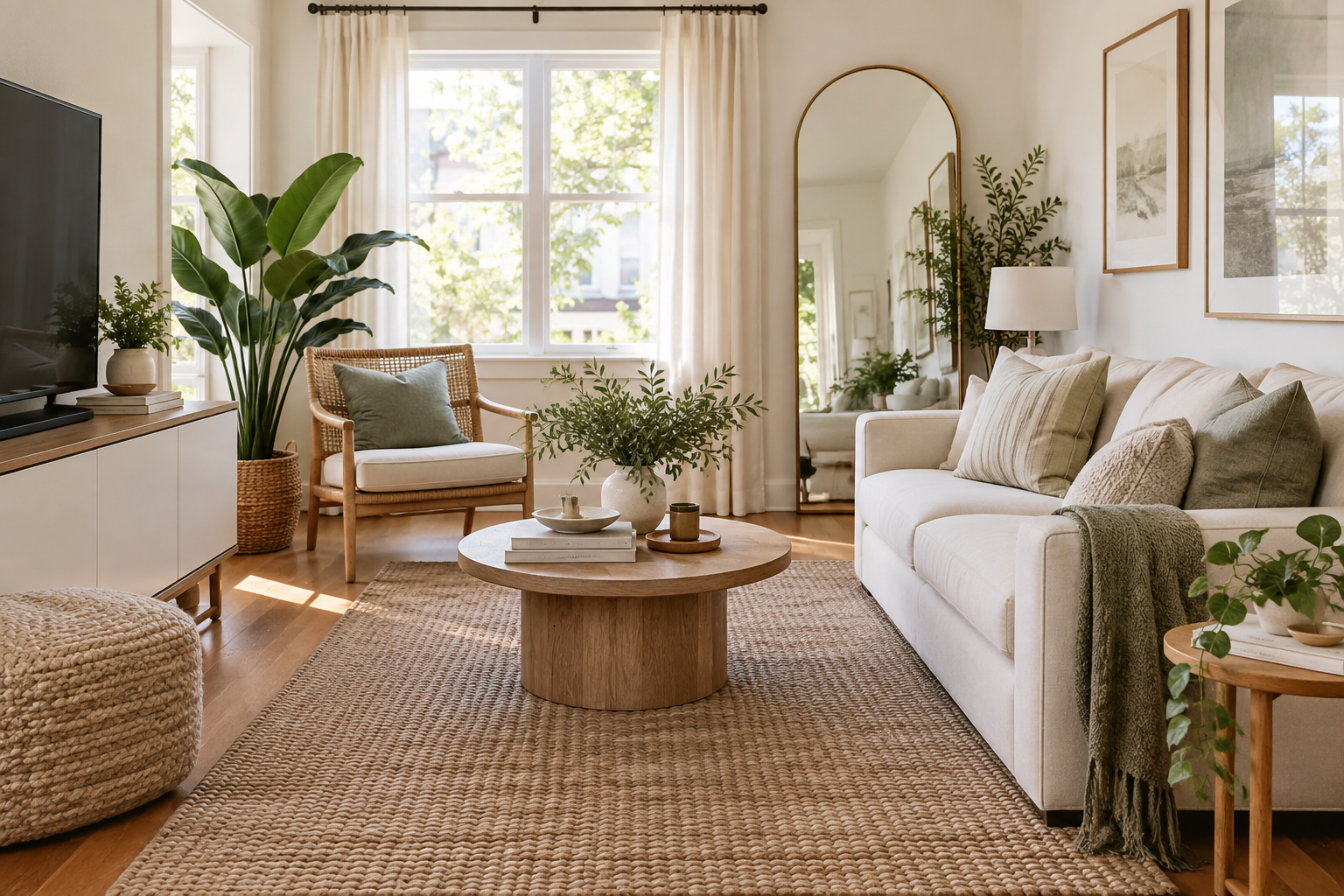
An open-feeling room is built from circulation and proportion. A successful update starts with proportion, existing materials, and daily use. Small changes work best when they solve a visible problem rather than copy a temporary trend. In this guide, the practical focus is scale, circulation, and visual calm.
A small living room feels more open when people can move through it easily, furniture has a clear job, and the eye is not asked to process competing visual clutter. This does not require removing every personal object or buying a matching furniture set. Begin with measurements and a realistic picture of how the room is used: conversation, television, reading, play, work, guests, or a route to another space.
Measure the area, inspect the surfaces, and decide what must remain functional. Start by testing the largest furniture pieces and the walking path before buying accents. For make a small living room feel more open, the first step is to decide what a useful outcome looks like in this particular space.
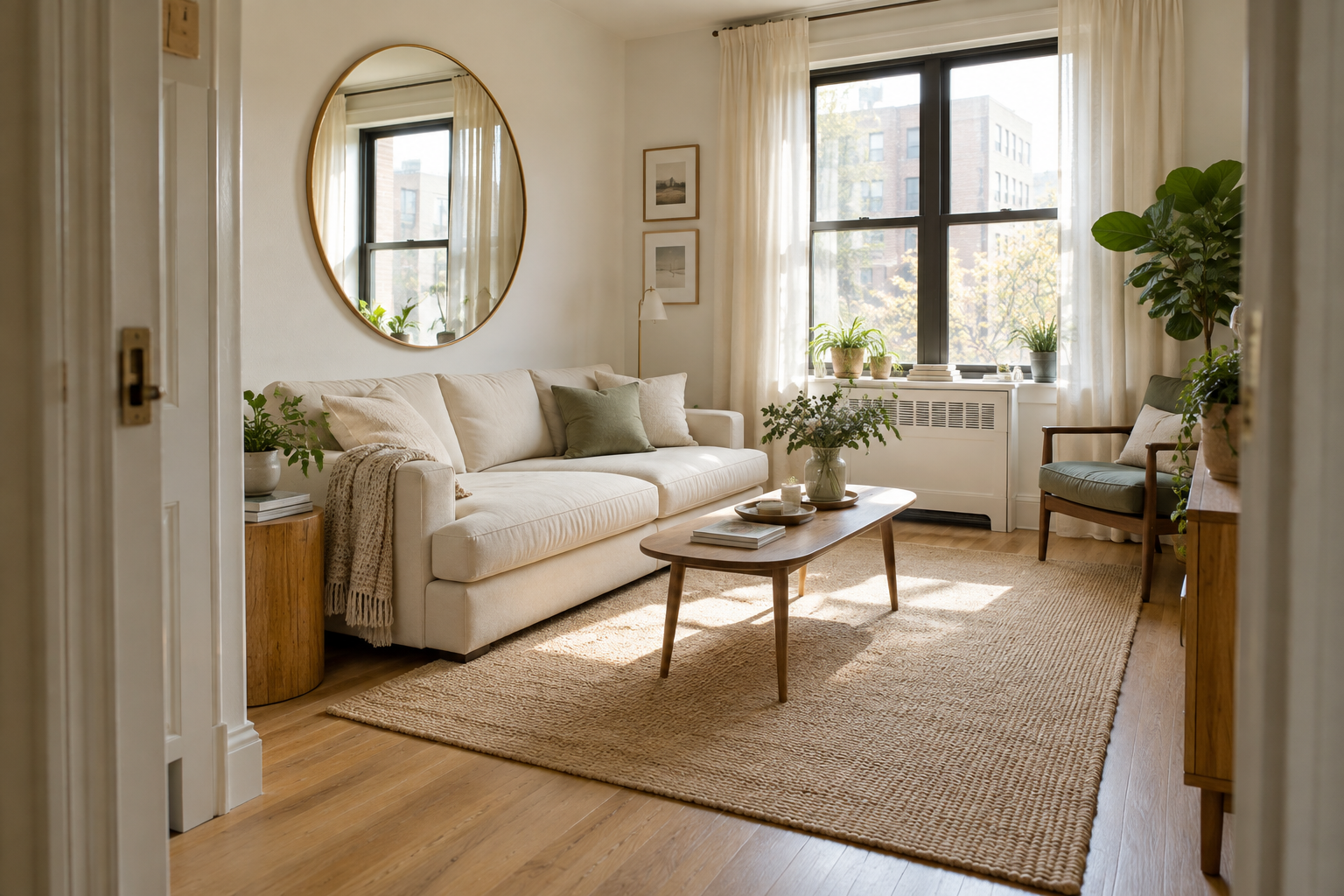
Use painter’s tape, paper, or a temporary arrangement before making a permanent change.
Stand back across the room; proportion is easier to judge from a few steps away.
Keep the route through the room clear while you work.
Choose hardware and materials for the actual surface, not just for the look you want.
Live with the change briefly before adding another layer.
Choose materials and fasteners for the actual wall, floor, or cabinet rather than appearance alone. Keep the work focused on an open route between seating, doors, and windows; pause before any change that affects building systems. For this project, return to the original purpose—scale, circulation, and visual calm—whenever a choice adds cost, complexity, or maintenance.
In make small living room open, verify dimensions at the installation point, select hardware suitable for the wall or item, and test the arrangement during normal use before making an irreversible change.
Mark the door swings, windows, radiators, outlets, and the route people use to cross the room. Aim for a clear walking path that does not require turning sideways around a coffee table or stepping over cords. Painter’s tape can outline a proposed sofa, chair, or rug footprint before you move heavy pieces. A smaller room often benefits from fewer pieces with enough breathing room rather than many small items pushed against every wall.
Choose seating by depth and visual weight as well as width. A shallow sofa with visible legs may leave more usable circulation than an oversized sectional, but comfort still matters. Consider a pair of compact chairs, a movable ottoman, or a nesting table if they solve a real seating or surface need. Keep the scale consistent: one large storage cabinet can be more useful than several narrow units that create visual interruptions.
Decide what the room does most often, then orient the main seating and surface around that use. A television, fireplace, window view, or conversation area can be the focal point, but not all need equal prominence. Pulling a sofa slightly away from the wall can create a more intentional seating group when circulation allows. Use a rug large enough to connect the front legs of the main seating, but leave a visible border of floor so the room does not feel crowded.
Keep cords, remotes, chargers, and hobby supplies contained near their point of use. A basket for a current project or a low cabinet for media can reduce the scattered small items that make a room feel cramped. Do not add storage furniture simply because a wall is empty; an open wall can be useful visual rest.
Layer light rather than relying on one bright ceiling fixture. A floor lamp for reading, a table lamp for ambient light, and a safe task light where needed can make corners usable without adding bulk. Keep window treatments easy to open so daylight reaches the room. Paint color can influence mood, but it cannot compensate for blocked paths or oversized furniture; test samples in the room’s actual light before committing.
Use mirrors carefully to reflect light or a pleasant view, not to double a cluttered wall. Hang art at a scale that suits the wall and keep a small edit of visible objects. The aim is a room that supports everyday use with less visual noise, not an empty room that cannot serve its occupants.
Live with a new arrangement through a normal week. Carry a laundry basket through the room, sit in every seat, open storage doors, and use the lamps at night. Notice whether a coffee table is too large, a chair blocks a pathway, or a storage piece attracts clutter because it lacks a clear category. Adjust the problem that appears instead of restarting the whole room.
In a rental, favor reversible changes: plug-in lighting, freestanding shelving that is secured when required, removable window treatments, and furniture pads that protect floors. Check lease rules before mounting anything. In a family home, choose storage that can be used by the people who need it and leave a safe route for children and pets. A room feels open when it is genuinely easy to inhabit.
End the day by returning cups, remotes, books, and current projects to their designated places. A five-minute reset preserves the clear surfaces and walking path created by the layout. If an item has no easy home, solve that storage decision instead of hiding it temporarily. Small routines protect the sense of space better than an occasional major rearrangement.
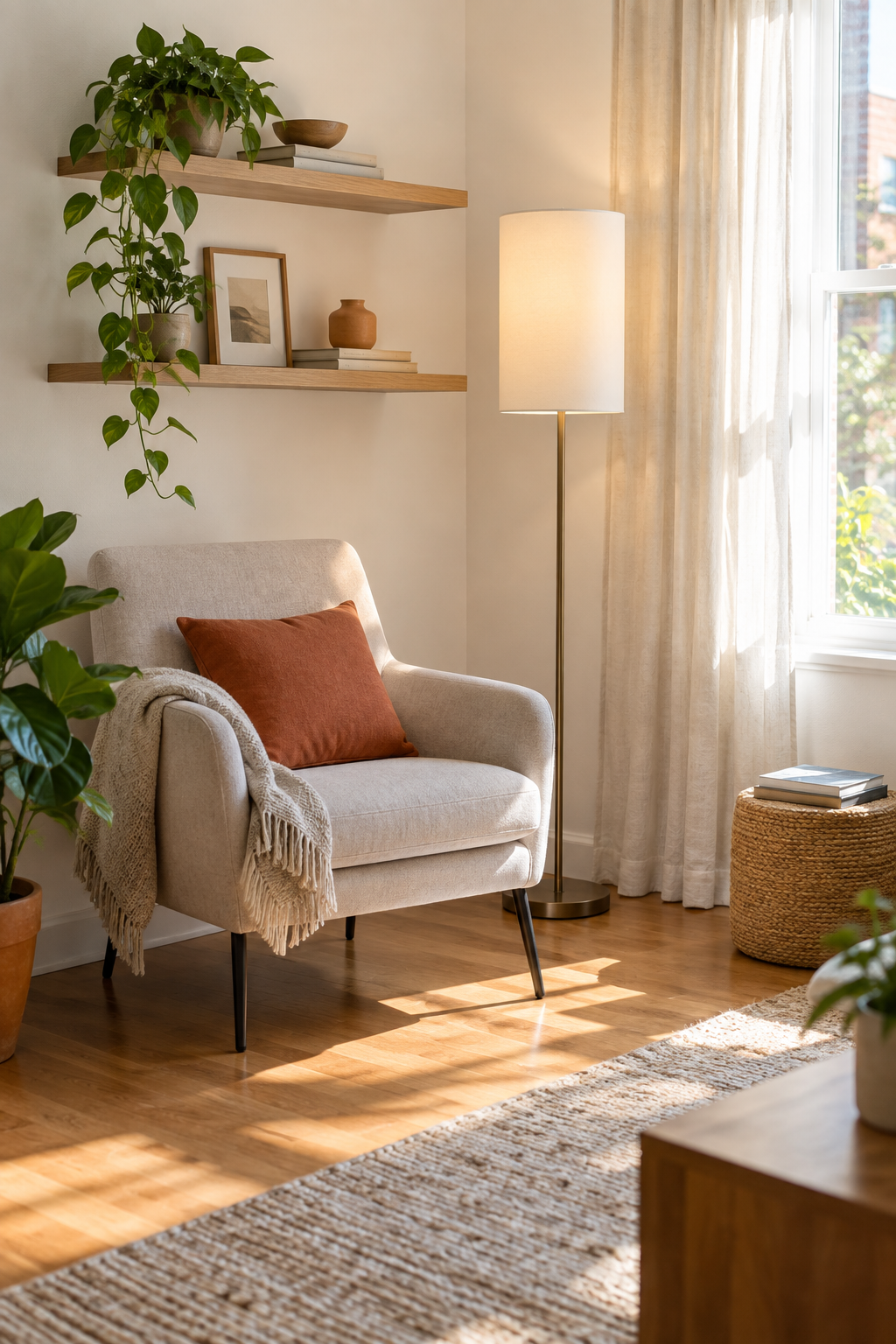
For ake mall iving oom pen, judge the result after ordinary use: it should support the room's purpose without making access, cleaning, or maintenance harder.
Measure the route between seating, doors, and storage before moving furniture. Leave a clear path where people naturally walk, choose legs or low profiles only when they suit the room, and use closed storage for the small objects that make a compact space feel crowded. A rug can define a zone, but it should not create a raised obstacle at a doorway. Test the arrangement during a normal evening before buying anything new.
For make small living room open, record the observation that changes the next decision: a leak, finish failure, unsafe access, persistent odor, or repeat damage. If a radiator, outlet, fixed shelving, or structural condition controls the layout, seek the appropriate help rather than treating it as routine care.