How to Clean a Kitchen Without Missing High-Touch Areas
Explore another practical cleaning & care guide.
Cleaning & Care
A seasonal checklist turns overlooked maintenance into manageable routines.

A seasonal checklist turns overlooked maintenance into manageable routines. The useful starting point is pairing weather-sensitive tasks with systems a homeowner can inspect safely. In this guide, the practical focus is preventive care and homeowner awareness.
A useful seasonal home-maintenance checklist is a record of changing conditions, not a list of chores to complete regardless of weather. The right timing depends on climate, home type, local rules, and the systems installed. Use the checklist to notice change, plan safe routine tasks, and schedule qualified help before a small problem becomes an emergency.
Read labels, identify the surface, and ventilate when the product instructions call for it. Before starting, gather the checklist, flashlight, gloves, and manuals before inspecting seasonal systems. For create a seasonal home maintenance checklist, the first step is to decide what a useful outcome looks like in this particular space.
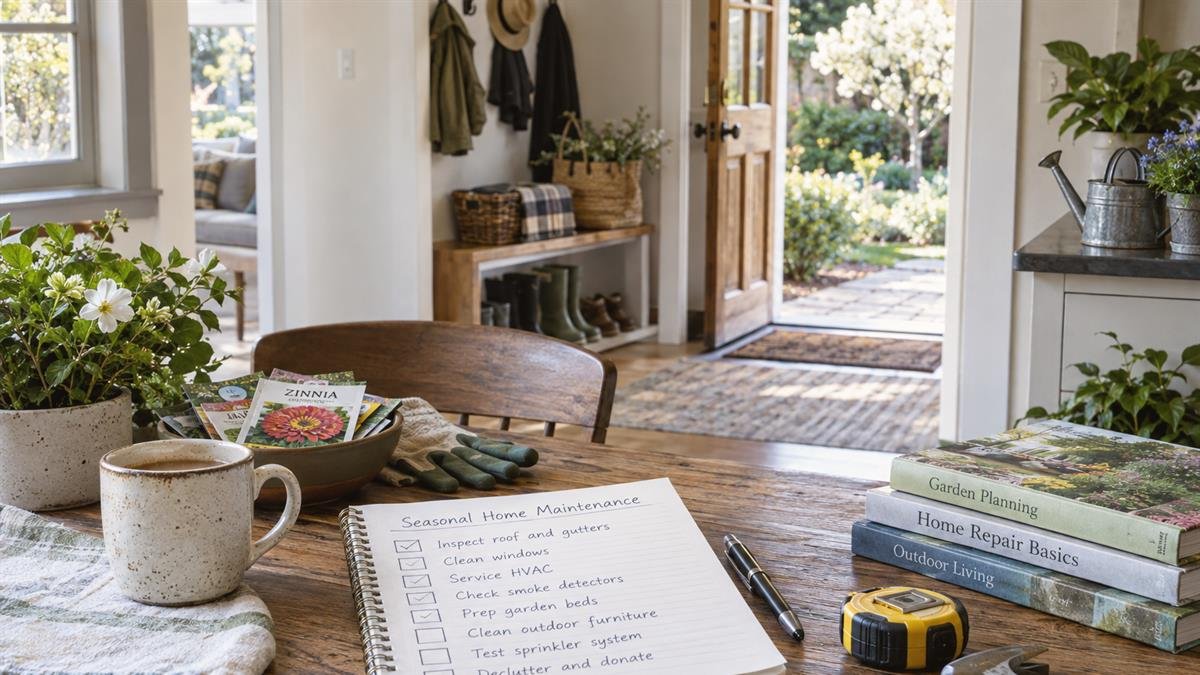
Begin with the mildest method; you can always repeat a gentle pass.
Use a fresh cloth or pad once the one in your hand is dirty.
Let the product do the work for the time stated on its label.
Check the surface while it dries instead of judging it while it is still wet.
Stop if the finish changes, feels tacky, or reacts in a way you did not expect.
Work from cleaner areas toward dirtier ones and let products sit only for the stated dwell time. For this task, dry wet surfaces and clean each tool before returning it to storage. For this project, return to the original purpose—preventive care and homeowner awareness—whenever a choice adds cost, complexity, or maintenance.
For easonal ome aintenance hecklist, use only products and tools approved for the material, and stop if cleaning reveals a damaged finish, persistent odor, leak, or other maintenance issue.
Begin with a slow walk around the property and note the roofline, gutters, siding, windows, exterior doors, walkways, drainage, utilities, and any area where water collects. Inside, note filters, smoke and carbon-monoxide alarms, visible plumbing, appliances, ventilation, and caulk around wet areas. Keep model numbers, warranties, and professional service records with the checklist. A townhouse, apartment, older home, and detached house will have different responsibilities, so confirm what the owner, landlord, association, or utility manages.
Group the list by conditions rather than fixed calendar months. A cold climate may need freeze protection and snow-load awareness; a hot climate may prioritize cooling equipment, irrigation, and storm preparation; a wet climate may demand more frequent checks for drainage and moisture. Check local guidance before any task involving permits, gas, electrical systems, roofs, or structural work.
After a winter or rainy season, inspect for loose shingles visible from the ground, damaged screens, clogged gutters, cracked paths, and water that drains toward the foundation. Test exterior lights and look for peeling caulk or paint at windows and doors. Change HVAC filters on the schedule recommended by the equipment maker, not simply because a checklist says “spring.” Test smoke and carbon-monoxide alarms according to manufacturer guidance and replace batteries or units when required.
Do not climb onto a roof or ladder without appropriate skill, equipment, and conditions. A professional inspection is safer for steep roofs, high gutters, damaged wiring, gas appliances, or any issue that is not clearly routine. Record a concern with a photo and date so it can be monitored or described accurately to a contractor.
Before hot weather, clear leaves and debris from outdoor equipment only as the manufacturer permits, check window coverings and weatherstripping, and confirm that drainage routes are open. Before storm season, secure outdoor furniture, inspect emergency supplies, and understand local warnings. Before freezing conditions, protect exposed plumbing as appropriate for the home, disconnect hoses where required, and know where the main water shutoff is located.
Keep the checklist short enough to use. Add a task only when it prevents a known risk, extends a system’s life, or meets a manufacturer requirement. Mark completed work, note observations, and schedule follow-up. Maintenance is valuable because it helps you notice change early, not because every season needs the same number of jobs.
Many homeowners can replace a compatible air filter, clear accessible debris, test an alarm as instructed, clean a range-hood filter, and record a leaking faucet. Electrical panels, gas connections, major plumbing, pest infestations, chimney systems, structural cracks, roof repairs, and HVAC service may require licensed or qualified professionals. Do not use a checklist as permission to perform a task beyond your experience or local legal requirements.
When hiring help, describe the observation rather than diagnosing the repair: “water appears after heavy rain at this wall” is more useful than guessing the cause. Keep invoices, reports, and dates with the maintenance record. They can support warranty claims, future service, and a clearer history for a buyer or landlord. Schedule seasonal service early when possible, since contractors are often busiest after severe weather begins.
Use a single paper sheet, shared calendar, or household note with the task, location, date, and next review point. Attach photographs of recurring cracks, stains, or drainage areas. At the end of each season, remove tasks that do not apply and add only lessons from the actual home. A living record is more useful than a generic checklist copied without reference to the property.
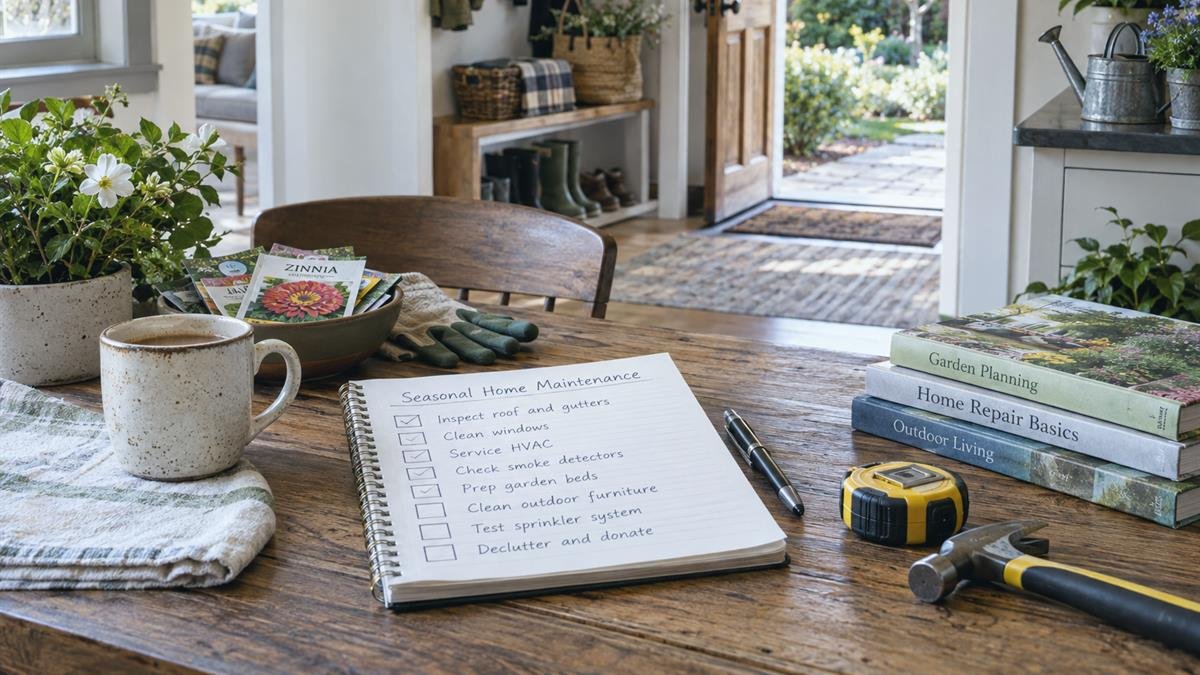
Adapt tasks to the building, weather, and local rules. Check exterior drainage, roof or gutter access only when it can be done safely, and schedule qualified help for electrical, gas, structural, pest, or roof work outside your competence. Record dates, observations, and service contacts so recurring leaks, drafts, or equipment behavior are easier to identify. A seasonal list is useful when it prompts timely inspection, not when it encourages risky work simply to complete a box.
Review before each season.
Adapt it thoughtfully each year.
For seasonal home maintenance checklist, record the observation that changes the next decision: a leak, finish failure, unsafe access, persistent odor, or repeat damage. If a roof leak, failed caulk, or irregular appliance behavior is found, schedule service, seek the appropriate help rather than treating it as routine care.
Keep photographs of recurring trouble spots, such as a wet basement corner or a cracked seal, alongside the checklist. Comparing the same location each season helps distinguish a one-time weather event from a condition that needs repair.