How to Set Up a Comfortable Small Patio
Explore another practical outdoor living guide.
Outdoor Living
Winter preparation protects materials and makes spring easier.
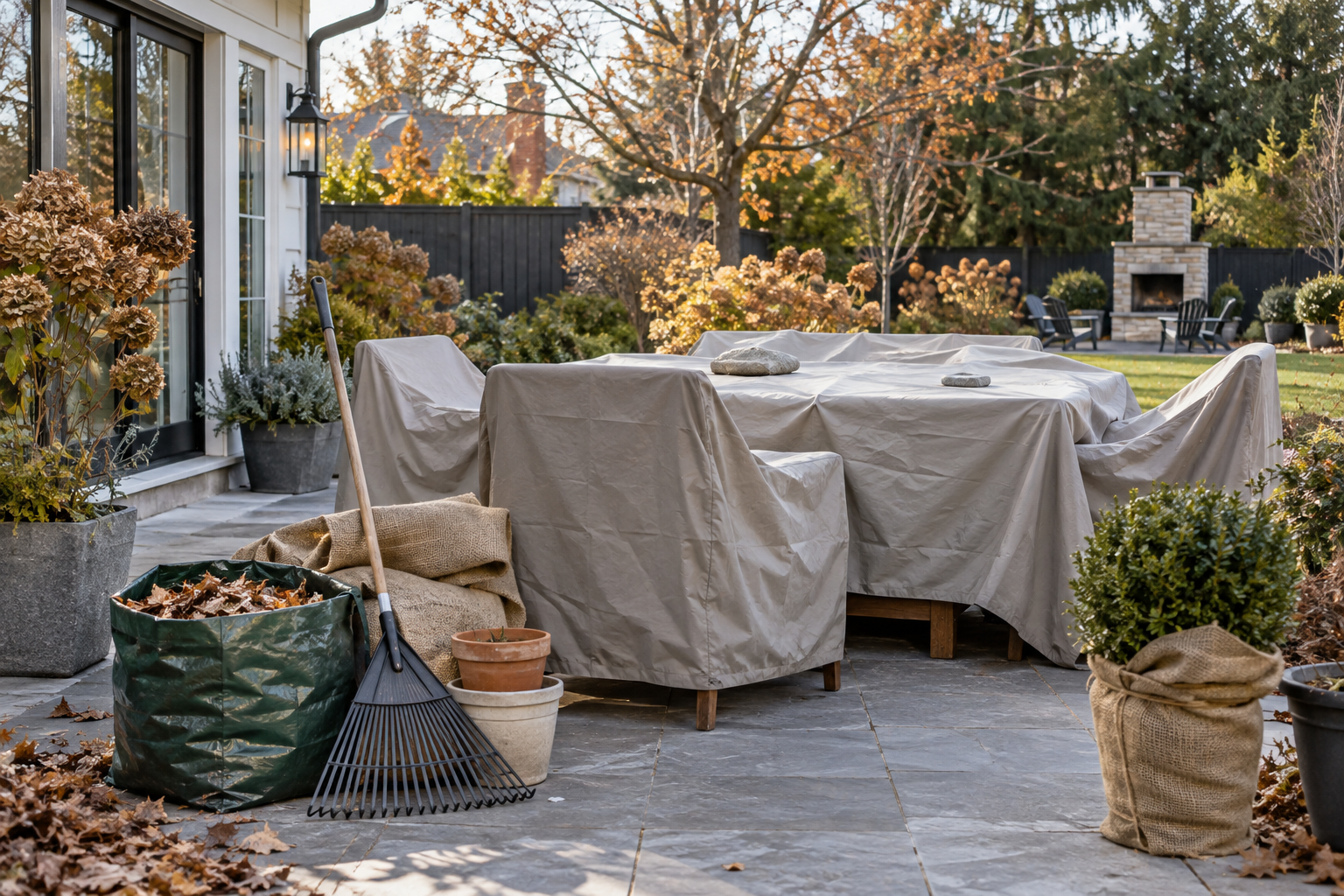
Winter preparation protects materials and makes spring easier. The most durable choice comes from planning around removing moisture, protecting vulnerable materials, and keeping drainage paths open. In this guide, the practical focus is cleanup, protection, and climate-specific timing.
Winter preparation should follow the conditions your yard actually faces. A mild rainy winter, a hard-freeze climate, and a dry cold region need different timing and protection. Start by checking local frost patterns, water restrictions, and the care needs of the plants and outdoor materials you own. The goal is to protect vulnerable systems, reduce storm damage, and make spring work easier—not to cut back or cover every plant on the same calendar date.
Observe the area at different times of day and check the condition of surfaces, fasteners, nearby plants, and drainage. Begin by checking local disposal rules and the manufacturer’s winter-care instructions. For prepare your yard and outdoor furniture for winter, the first step is to decide what a useful outcome looks like in this particular space.
Walk the property before severe weather begins. Note branches near structures, clogged gutters and drains, loose furniture, damaged deck boards, exposed hoses, and low spots that collect water. Photograph concerns and arrange qualified help for work beyond your skill or safe reach. Do not climb a roof, handle electrical systems, or prune near utility lines without appropriate training and clearance.
Identify plants before pruning or cutting them back. Some perennials benefit from being left standing for winter habitat or protection, while others may need cleanup to reduce disease. Follow plant-specific and local guidance rather than applying one rule to every shrub. Water newly planted trees and shrubs appropriately before the ground freezes where local conditions support it, then mulch the root zone with a suitable material kept away from trunks and crowns.
Remove diseased plant material and dispose of it according to local guidance. Use fallen leaves as mulch or compost only when they are healthy and appropriate for the system; thick wet layers on lawn or delicate plants can block light and hold moisture. Protect tender plants only when the temperature, species, and local advice call for it. Covers should allow airflow and be removed or vented when conditions change so they do not create heat or moisture problems.
Follow local and manufacturer instructions for hoses, irrigation, fountains, pools, and outdoor plumbing. Disconnect hoses where freezing is expected, drain and store equipment as directed, and know the location of shutoff valves. Do not force frozen valves or pipes. A leak, unusually low water pressure, or suspected frozen pipe may require prompt qualified help to prevent damage.
Clear leaves and debris from drainage routes, steps, decks, and walkways. Repair loose handrails, lighting, or surfaces before ice, heavy rain, or snow makes them hazardous. Use de-icing products only when compatible with the surface, nearby plants, pets, and local guidance. Avoid piling snow or leaves against the house where moisture can remain trapped.
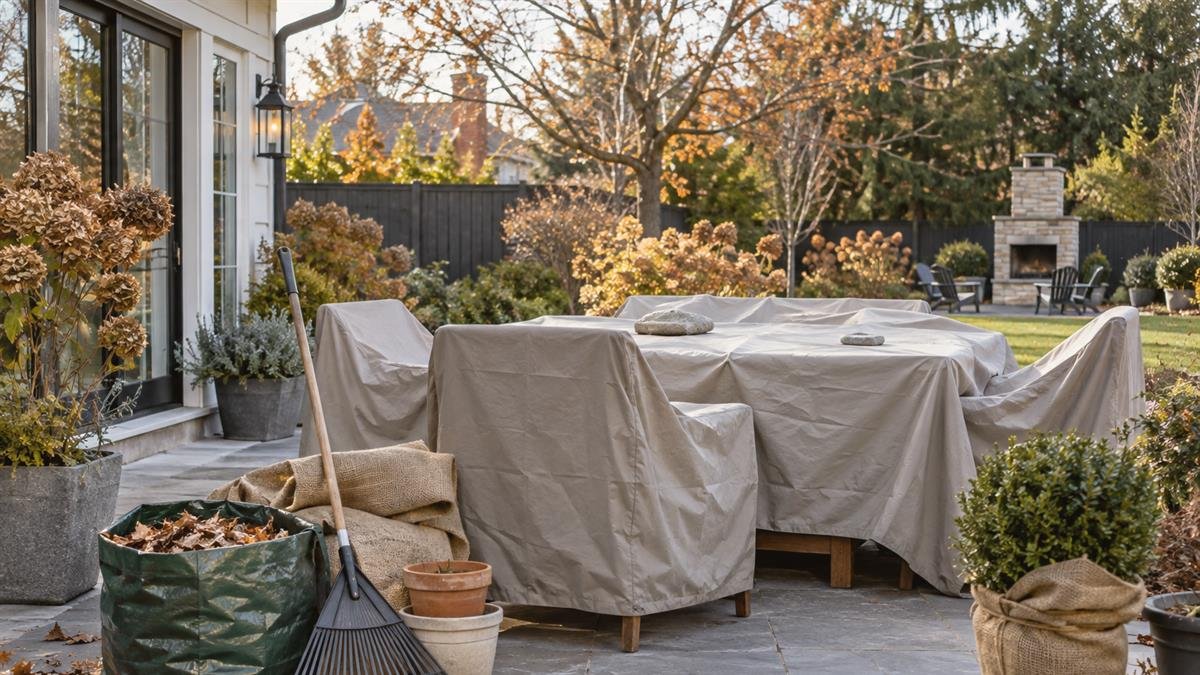
Clean furniture according to its material, let it dry completely, and inspect fasteners, cushions, and covers before storage. Store cushions and vulnerable pieces in a dry location where pests and moisture are less likely to damage them. Covers should fit, allow ventilation, and be secured in wind; a wet cover left tightly against furniture can trap moisture and create mildew or corrosion. Keep heavy furniture stable and clear of paths if it must remain outside.
Make a short spring-start note as you finish: what was stored, what needs repair, and which plants or surfaces need monitoring. This record prevents forgotten tasks and makes the first warm week less overwhelming. Winter preparation is successful when the yard remains safe, drains properly, and is ready to recover when the season changes.
Keep emergency access routes, outdoor lights, address numbers, and any required utility equipment visible and usable. Secure loose objects before wind events, but do not put yourself at risk trying to move heavy furniture or branches during a storm. Check local weather alerts and follow community instructions for snow, flooding, or wildfire conditions. A seasonal plan should include the people and services that may need to reach the home, not only the appearance of the yard.
Review tools before storing them. Clean soil from shovels and pruners, dry metal surfaces, sharpen only when you know how to do so safely, and store fuels, batteries, and chemicals according to their labels and local rules. Keep tools needed for winter access available rather than packing them behind seasonal décor. This simple organization reduces rushed, unsafe searches in bad weather.
After a hard rain, freeze, or wind event, inspect from a safe location for drainage problems, fallen branches, loose covers, and damaged plants. Document changes and arrange repairs promptly. Early attention can prevent a small issue from becoming a winter-long source of damage.
Start with safety and stability before adding anything decorative.
Walk the route as a guest would and notice where movement feels awkward.
Plan for sun, rain, and wind rather than the best-looking moment of the day.
Check fittings and surfaces after the first use or weather change.
Leave yourself an easy cleanup and storage routine for the next time.
Choose materials that suit the actual exposure, leave access for cleaning and maintenance, and correct small hazards before decorating. Weather, moisture, and weight limits matter as much as appearance outdoors. For this project, return to the original purpose—cleanup, protection, and climate-specific timing—whenever a choice adds cost, complexity, or maintenance.
In prepare yard for winter, keep access and drainage clear, secure items for the site conditions, and treat loose, damaged, or load-bearing features as repair issues rather than ordinary upkeep.
For repare ard or inter, inspect the space after the weather condition most likely to affect it and adjust only the feature causing the problem.
Use local frost dates and winter conditions to decide timing rather than copying a calendar from another climate. Remove damaged plant material, protect tender plants only when appropriate, and follow equipment manuals when storing mowers, hoses, or irrigation components. Keep drains and paths clear of leaves, inspect trees for obvious damage from the ground, and seek qualified help for overhead, structural, electrical, or gas-related work. A few well-timed tasks reduce winter damage without disturbing plants that need their seasonal cover.